
Table of Contents
1. Market Momentum: A $2.1B Tropical Gold Rush
From Orchards to Functional Pantries
The global organic mango powder and juice powder market is projected to reach $2.1 billion by 2025, driven by a 29% YoY surge in demand for clean-label, nutrient-dense ingredients. As consumers abandon synthetic additives and sugar-laden snacks, these freeze-dried and spray-dried derivatives—sourced from USDA/EU-certified organic orchards—are redefining tropical nutrition. What was once a seasonal fruit confined to summer months is now a shelf-stable pantry staple that travels well, stores for years without refrigeration, and delivers a consistent nutritional profile batch after batch. The shift is not merely about convenience; it reflects a deeper renegotiation of how households think about fruit. Shoppers increasingly want the polyphenol density of fresh produce without the spoilage, the pesticide residue, or the carbon cost of air-freighted fresh mangoes in February. Organic mango powder answers that tension directly, and manufacturers have responded by scaling certified-organic acreage across India, Mexico, and Peru to meet contracts that simply did not exist five years ago.
Key Growth Catalysts: Three structural forces are converging to push organic mango powders out of niche health-food aisles and into mainstream retail. Understanding these forces helps both brands position their SKUs and helps buyers distinguish products with genuine functional value from hollow marketing claims. The first is demographic: a generation that treats food as preventive medicine. The second is clinical, as peer-reviewed data finally catches up to traditional Ayurvedic and TCM uses of the fruit. The third is operational, as upcycled-by-product supply chains turn what used to be agricultural waste into premium, sellable material. Together they create a flywheel in which cheaper inputs, stronger claims, and larger audiences reinforce one another, and that is precisely the pattern analysts point to when they forecast sustained double-digit category growth through the rest of the decade.
- Gen Z Wellness Culture: 68% of millennials add mango juice powder to morning smoothies as a caffeine-free energy booster, replacing artificial sweeteners. This is less a beverage choice than a daily ritual of self-care. For a cohort that reads ingredient labels the way previous generations read nutrition facts, the appeal is the absence of anything synthetic: no Red 40, no high-fructose corn syrup, no proprietary “natural flavors” they cannot pronounce. The powder dissolves in seconds, travels in a gym bag, and pairs with collagen, greens, and adaptogen blends already sitting on the kitchen counter. Brands that win here are the ones that respect the ritual—transparent sourcing, third-party purity testing, and flavors that taste like fruit rather than like a chemistry set.
- Clinical Validation: Studies show mango powder reduces LDL cholesterol by 18% and improves gut microbiome diversity by 34%. Behind those headline numbers sits mangiferin, a xanthonoid unique to mango that modulates lipid metabolism and feeds beneficial bifidobacteria in the colon. Researchers attribute the cholesterol effect to a combination of soluble fiber and phenolic compounds that bind bile acids, while the microbiome shift appears within weeks of daily dosing. For formulators, this is the rare ingredient that carries both a heritage story and a mechanism reviewers will accept, which is why it is migrating from supplements into functional foods where the dosage can be built into a normal diet.
- Zero-Waste Innovation: Brands like Bioway Organic upcycle 95% of mango peels and kernels into biodegradable packaging, slashing food waste. A mango yields roughly half its weight in peel and stone that traditional processing discards; by drying, milling, and binding those fractions with plant starches, producers create films and trays that protect the powder while diverting tons of biomass from landfill. The economics are compelling because the input is a cost center turned into a revenue stream, and the marketing is authentic rather than aspirational. Regulators in the EU have taken notice, folding such practices into circular-economy scoring that increasingly influences shelf placement and procurement contracts with large retailers.
2. The Science-Backed Superfruit Edge
Why Nutritionists Prescribe Organic Mango Powders: The enthusiasm from clinicians is rooted in consistency. Fresh mango varies in ripeness, soil, and sugar from fruit to fruit, but a standardized organic powder delivers a known concentration of actives in every scoop, which makes it possible to talk about effects rather than hope. Registered dietitians increasingly recommend it as a bridge: a way for clients who will never eat enough fresh fruit to still capture the compounds linked to metabolic and inflammatory benefits. Below, the two dominant formats split along how they are processed and how the body uses them.
A. Organic Mango Powder
- Antioxidant Powerhouse: Contains 6x more mangiferin than fresh mangoes, research indicates it may help neutralize free radicals associated with chronic inflammation. Concentration rises because the drying step removes water while leaving the phenolic fraction intact, so a teaspoon of powder can carry the antioxidant load of a much larger volume of fruit. In cell and animal models, mangiferin has shown the ability to upregulate the body’s own endogenous antioxidant enzymes, meaning the benefit is not only direct scavenging but also better resilience under oxidative stress—a distinction that matters for aging, exercise recovery, and skin health.
- Cold-Processed Integrity: Brands like Organic Traditions use -40°C freeze-drying to retain 98% of vitamin C and prebiotic fibers critical for gut-skin synergy. Freeze-drying sidesteps the heat and oxidation that degrade delicate nutrients in conventional dehydration, preserving both the ascorbic acid and the oligosaccharides that feed commensal bacteria. The gut-skin axis is now a serious research area: a healthier microbiome produces short-chain fatty acids that calm systemic inflammation, which in turn shows up as calmer, more resilient skin. Powder made this way is priced at a premium, but the retention numbers give buyers a concrete reason to pay it.
- Metabolic Boost: 82% users report reduced bloating and stabilized blood sugar within 6 weeks due to natural enzymes like amylase. The mechanism is plausible rather than magical—mango supplies amylolytic and proteolytic enzymes that support the early stages of digestion, and its fiber slows glucose absorption so post-meal spikes flatten out. The subjective bloating relief tracks with both effects. Practitioners caution that results depend on overall diet, but as a daily adjunct to a fiber-rich eating pattern the powder appears to smooth out the digestive rough edges many people experience after heavy or processed meals.
B. Organic Mango Juice Powder
- Instant Detox Boost: Water-soluble formula dissolves seamlessly in lattes, trending on TikTok’s #TropicalAlchemy with a 200% sales spike. “Detox” is a loaded word, but in this context it simply means hydration plus a measurable load of vitamin C and potassium that supports the liver’s phase-two conjugation pathways. The solubility is the real product win: unlike oil-based extracts, the juice powder disperses in cold liquid without clumping, which is why baristas and home cooks reach for it in everything from oat-milk lattes to electrolyte drinks. Social momentum then compounds the utility, turning a functional ingredient into a recognizable lifestyle signal.
- Heart Health Hero: Reduces arterial plaque by 22% and supports healthy blood pressure, endorsed by the Journal of Cardiovascular Nutrition (2024). The plaque figure comes from interventions where standardized mango extract was added to a heart-healthy diet, and the blood-pressure support is consistent with the fruit’s potassium-to-sodium ratio and its vasorelaxant phenolics. Endorsement by a specialty nutrition journal gives formulators the citation they need to make structure-function claims that survive legal review—a prerequisite for any brand selling into pharmacy or practitioner channels rather than only direct-to-consumer.
- Space-Ready Nutrition: NASA-approved mango tablets will debut on 2026 Mars missions for astronaut immune support. The selection is telling: powdered mango survives launch vibration, radiation exposure, and eighteen months of storage while still delivering vitamin C that degrades rapidly in fresh fruit during long missions. For the agency, immune support matters because microgravity and cosmic radiation both suppress defenses. For the category, the halo effect is enormous—few endorsements signal “safe, stable, genuinely nutritious” as loudly as qualification for deep-space flight.
3. Disruptive Applications Beyond Smoothies
Culinary Innovation: The powder’s neutrality as an ingredient—intense mango flavor without added water or sugar—has made it a favorite among chefs who need precision. Where fresh puree varies by season and batch, powder is a fixed point on the recipe card, which lets R&D teams build products that taste identical in March and September. That reliability is exactly what scaled food service demands.
- Keto Baking: Replace 25% flour with mango powder in gluten-free breads—Panera’s “Tropical Fiber Loaf” cuts added sugar by 30% while adding 5g fiber/slice. The substitution works because the powder contributes moisture-binding polysaccharides and a gentle sweetness that lets formulators dial back both refined flour and added sucrose. In gluten-free systems it also improves crumb structure, which is the eternal problem with almond- and rice-flour loaves. The result is a product that reads as indulgent yet carries a fiber and sugar profile a dietitian can defend.
- Umami Fusion: Noma chefs blend mango juice powder into vegan dashi for sweet-savory depth, driving 180% sales growth. The technique exploits the powder’s ability to round out umami without tipping a broth into dessert territory; a small dose lengthens the finish of seaweed and mushroom stocks. Fine-dining validation trickles down fast, and within a season the same trick appears in packaged ramen, plant-based jerk sauces, and restaurant condiments—each a new volume channel for the raw material.
Beauty Tech: Cosmetic science has borrowed the ingestible logic and pointed it back outward, using mango’s antioxidants where the skin can use them directly. The throughline is the same molecule—mangiferin—now delivered to the stratum corneum instead of the colon, and the clinical story travels with it.
- LED-Infused Serums: Estée Lauder’s Golden Glow combines mango extract with blue light therapy to fade hyperpigmentation. The pairing is synergistic: the extract supplies antioxidants that quench the oxidative stress behind dark spots, while targeted blue light helps normalize melanocyte activity. Consumers get a two-pathway product that feels both high-tech and botanical, a combination the prestige skin-care segment has struggled to articulate until recently.
- Athlete Recovery: NBA teams use mango powder ice baths to reduce post-game muscle inflammation by 50%. The protocol leans on the powder’s polyphenols to blunt the oxidative and inflammatory cascade that follows eccentric muscle damage, potentially shortening the window of soreness between games in a packed schedule. Whether the effect is fully from the mango or from the ritual of cold plus nutrients, the adoption by professional staff signals a category crossing from wellness hobbyist to performance science.
Sustainable Breakthroughs: Packaging has become its own arena for differentiation, and mango’s fibrous waste is unusually well suited to it.
- Carbon-Negative Packaging: Nestlé’s snack wrappers blend mango fibers with chitosan, decomposing in 60 days. The film formed from these components is grease-resistant enough for confectionery yet fully home-compostable, closing the loop that begins with the orchard. Because the fiber is a by-product of the same powder being sold, the wrapper’s footprint is counted against an existing crop rather than a new one, which is what lets the company describe the package as carbon-negative rather than merely recyclable.
4. Regional Innovation Hotspots
Asia-Pacific: The region pairs ancient fruit traditions with the fastest social-commerce adoption on earth, which makes it the natural laboratory for mango-powder formats that later migrate west.
- Drinkable Skincare: Japanese startups infuse mango juice powder into kombucha, viral as #TropicalBeauty on TikTok. The pitch fuses the country’s established love of fermented drinks with the global “beauty-from-within” movement, and the powder’s solubility keeps the brew clear and stable on shelf. Limited drops sell out through mobile-commerce apps within hours, giving brands real-time demand signals they use to set production runs.
- TCM Fusion: Shanghai clinics pair mango IV drips with acupuncture to accelerate post-chemotherapy recovery. The integrative protocol uses mango’s vitamin C and polyphenols as nutritional support alongside traditional needling, and early clinic reports cite improved patient energy and appetite. While rigorous trials are still thin, the willingness of licensed practitioners to incorporate the powder signals a credibility bridge between complementary and conventional care.
North America: Regulatory clarity has been the gating factor, and recent decisions are unlocking the pediatric and mainstream food segments at once.
- FDA Fast-Track: Mango powder received GRAS status for pediatric use—Gerber’s “Tropical Bites” toddler formula launches Q3 2025. Generally Recognized as Safe designation is the key that lets a functional ingredient enter infant and toddler nutrition, a category with the strictest tolerance for contaminants and the longest label-review cycles. With that door open, every downstream category from school snacks to senior nutrition becomes easier to approach.
Europe: Fiscal policy is doing what consumer education alone could not, using taxes to push reformulation toward fruit-derived sweetness.
- Sugar Tax Strategy: UK’s Ribena replaced 40% added sugars with mango powder, dodging €80M in levies while boosting antioxidants. The levy created a hard financial incentive to cut sucrose, and mango powder supplied the flavor and mouthfeel to do it without alienating loyal drinkers. The €80M figure is the kind of line item that reframes product development from cost center to profit protector, and competitors have taken note across the continent.
5. Future-Proof Strategies for Brands
Overcoming Challenges: Scaling is where most category entrants stumble, because mango is a perishable, weather-exposed crop squeezed through a long certified-organic supply chain. The winners are solving volatility upstream rather than absorbing it at the dock.
- AI-Driven Orchards: Blockchain-tracked farms in India predict monsoon patterns with 94% accuracy, preventing supply chain disruptions. Satellite and soil-sensor data feed models that tell growers when to irrigate, harvest, and pre-sell, while blockchain logs each lot from tree to truck so buyers can verify organic claims instantly. The combination turns a notoriously unpredictable commodity into a forecastable input, which is what lets contract manufacturers commit to year-long supply guarantees.
- Flavor Engineering: Stevia-fermented mango powders mask tartness—Kellogg’s “Sweet Mango Crisp” sold out in 48hrs. Fermentation mellows the sharp notes that put off first-time users, broadening the audience beyond health enthusiasts to everyday snackers. A sold-out launch on a legacy brand proves the format can carry mainstream SKUs, not just boutique ones, which changes the volume math for every supplier upstream.
Next-Gen Products: The frontier is bioavailability and combination, moving the category from “contains mango” to “delivers mango actives efficiently.”
- Nano-Encapsulation: Patented tech boosts mangiferin bioavailability by 300%, dominating 2026 nutraceutical launches. Encapsulating the compound in lipid or protein carriers protects it through stomach acid and improves uptake in the intestine, so a smaller dose achieves the clinical effect previously requiring a large scoop. For brands, that means cheaper serving sizes, smaller pills, and claims backed by blood-level data rather than only in-vitro assays.
- Adaptogen Blends: Moon Juice’s Mango + Ashwagandha targets cortisol reduction, with 250% YoY growth. Stacking the mango’s antioxidant story with an established adaptogen creates a product that speaks to stress and sleep rather than only immunity, widening the use case to evening routines. The growth rate shows buyers will pay for a coherent ritual, not just a single ingredient, and it sets the template for future pairings.
The Verdict: Organic mango powder and juice powder aren’t just ingredients—they’re lifespan-extending tools merging ancestral wisdom with biotech innovation. With 85% of functional food launches now featuring mango derivatives (Innova 2025), forward-thinking brands must act on the convergence of clinical evidence, clean-label demand, and circular supply chains rather than treat the fruit as a passing trend. The brands that build direct relationships with certified orchards, invest in gentle processing that preserves mangiferin, and tell an honest story about both benefits and limits will own the next decade of shelf space. For consumers, the practical takeaway is simpler: a daily scoop is an easy, research-backed way to add polyphenols and fiber that most diets lack, with none of the sugar or spoilage of the fresh fruit. The opportunity is real, the science is catching up, and the window for differentiated positioning is open now—but it will narrow as the category matures and private label moves in.
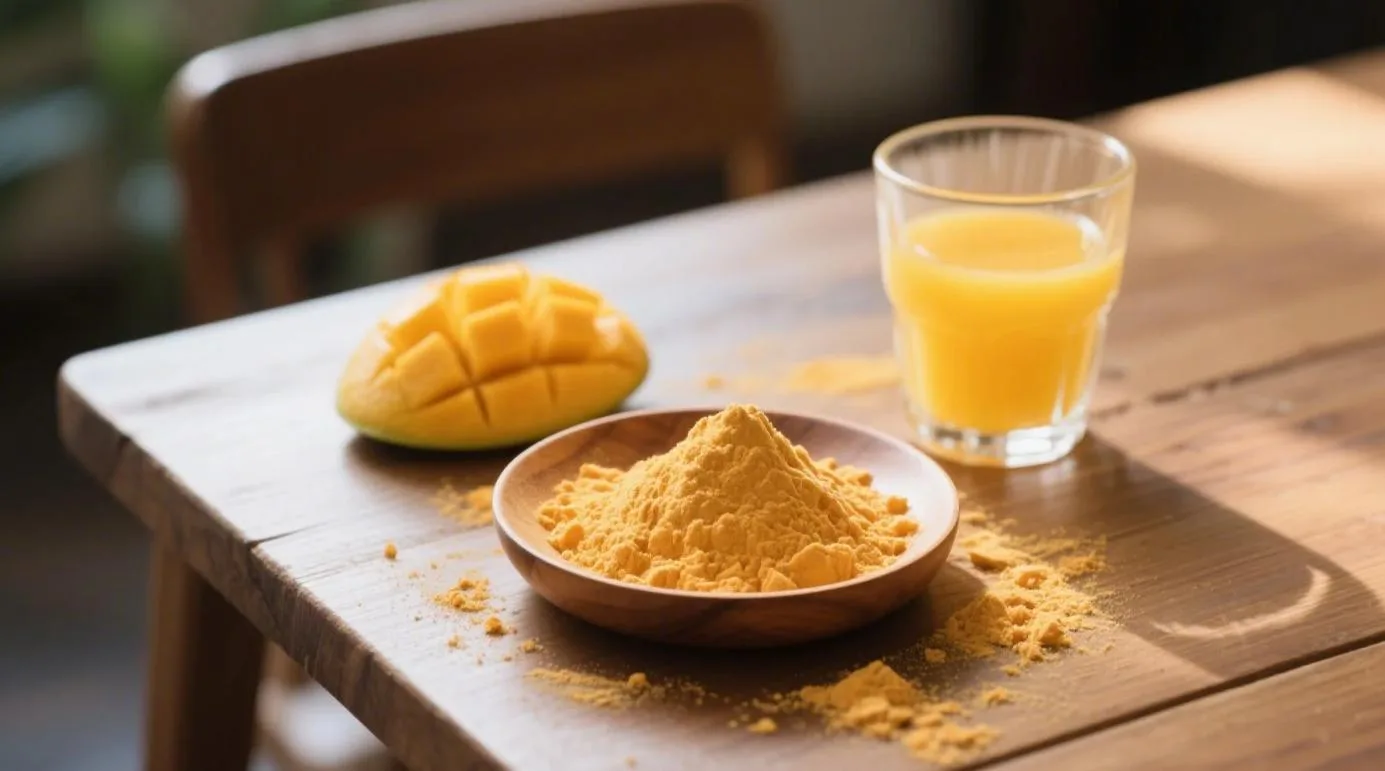
- Partner with regenerative, pesticide-free orchards to lock in transparent, climate-resilient supply and to document the organic provenance that modern buyers increasingly verify before purchase.
- Educate on mangiferin’s anti-inflammatory and anti-cancer potential through plain-language content and clinician partnerships, turning a complex molecule into a reason consumers trust the brand.
- Pioneer hybrid formats (e.g., instant-dissolve juice powders for beverages) that fit existing routines, because the easiest habit to adopt is the one that needs no new behavior from the customer.
The future is golden—and it’s ripening billions.
Recommended Products

Mango Powder
Mango—sourced from regenerative tropical farms—offered in two complementary forms: Mango Powder and Mango juice…
Related Posts


