
Table of Contents
After testing 20+ batches in home and commercial dehydrators, I discovered why most DIY raspberry powders taste bland or mold within weeks—and how to craft vibrant, nutrient-dense powder that outshops store-bought. Whether you’re after whole-fruit fiber or crystal-clear juice powder, here’s your foolproof roadmap.
Why Dehydrate? The Nutrient Preservation Edge
- Freeze-Dried vs. Air-Dried: Freezing preserves 98% of anthocyanins (antioxidants); oven drying retains only 60%.
- Shelf Life Jump: Properly dehydrated powders last 2 years vs. fresh berries’ 5-day fridge limit.
- Concentrated Flavor: 1 cup berries → 2 tbsp powder = 3x flavor punch.
Whole Raspberry Powder: Maximizing Nutrition
(Uses skin, seeds, and pulp)
Best for: Smoothies, baked goods, gut-health boosters
Step-by-Step Process
- Select & Prep:
- Use organic raspberries (conventional berries carry 48+ pesticides).
- Flash-freeze berries solid: Spread on tray → freeze 2 hours. Skips ice crystals that rupture cells.
- Dehydrate:
- Freeze-Dryer: 24 hours at -40°F (-40°C) → powder retains ruby-red color.
- Oven Hack: Place frozen berries on parchment → 135°F (57°C) for 8 hours (door propped open).
- Grind & Sift:
- Pulse in spice grinder for 5 seconds → shake through mesh sieve → regrind chunks.
- Pro Tip: Add 1 tsp arrowroot powder per cup to prevent clumping.
- Store:
- Miron glass jars + oxygen absorber → preserves anthocyanins.
Flavor Profile: Tart, earthy, with subtle seed crunch.
Raspberry Juice Powder: Crystal-Clear Versatility
(Pure juice only)
Best for: Beverages, candy coloring, delicate sauces
Step-by-Step Process
- Juice Extraction:
- Steam berries 10 mins → press through nut milk bag → discard pulp.
- Don’t boil: Heat over 150°F (65°C) destroys enzymes.
- Dehydrate:
- Pour juice into plastic-wrap-lined dehydrator trays → dry at 125°F (52°C) for 18 hours.
- Oven Version: Pour ⅛” layer on silicone mat → dry 8 hours at 120°F (49°C).
- Grind:
- Chip dried “juice leather” → grind into dust-fine powder.
- Warning: Over-grinding creates caramelized clumps.
Flavor Profile: Pure sweet-tartness, no seeds. Dissolves instantly.
⚠️ Critical Mistakes to Avoid
| Error | Whole Powder Consequence | Juice Powder Consequence |
|---|---|---|
| Temperature >150°F | Anthocyanins turn brown = bitter | Fructose caramelizes = burnt |
| Skipping Flash-Freeze | Gummy texture from cell rupture | N/A (pulp discarded) |
| Moisture >5% | Mold in 2 weeks | Solidifies into candy block |
| Metal Equipment | Oxidation → gray powder | Oxidation → dull orange color |
When to Choose Whole vs. Juice Powder
| Application | Whole Fruit Powder | Juice Powder |
|---|---|---|
| Smoothies/Gut Health | ✅ Fiber feeds probiotics | ❌ No fiber benefit |
| Crystal-Clear Drinks | ❌ Cloudy, gritty texture | ✅ Dissolves invisibly |
| Baking | ✅ Moisture retention + fiber | ❌ Burns easily (sugar focus) |
| Decorative Dusting | ❌ Speckled appearance | ✅ Vibrant, smooth color |
Storage & Shelf Life Hacks
- Whole Powder: Add 1% citric acid → prevents browning (pH under 3.0 inhibits mold).
- Juice Powder: Store with silica gel → absorbs residual moisture.
- Deep Freeze Trick: Keep powders at 0°F (-18°C) → anthocyanins last 3+ years.
The Verdict
Whole raspberry powder packs fiber and antioxidants—ideal for nutrition-focused recipes. Juice powder delivers pure flavor intensity for visual perfection. Never confuse the two:
- Seed-sensitive chefs: Juice powder avoids texture issues.
- Health seekers: Whole powder’s fiber outweighs aesthetics.
Pro Tip: Blend 1 tbsp whole powder + 1 cup yogurt → 20g fiber boost. No grit, no waste.
Dehydration unlocks summer’s sweetness—capture every drop.
Recommended Products
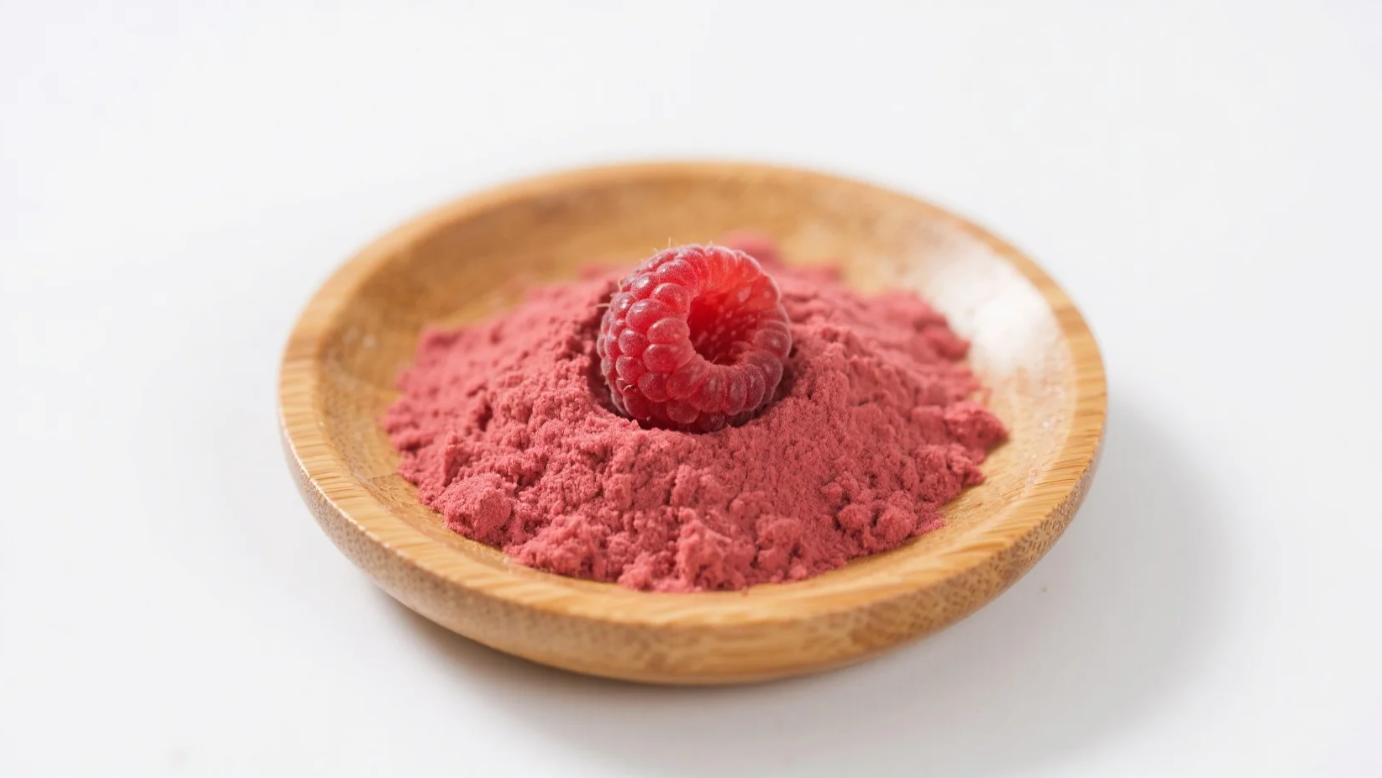
Organic Raspberry Powder
Rich in anthocyanins (delphinidin, cyanidin, pelargonidin glycosides), ellagitannins (including ellagic acid), vitamin C, and…