
Table of Contents
As organic hemp protein powder gains wider adoption across plant-based and clean label product lines, buyers and formulators face a critical challenge:
Not all hemp protein powders perform the same in different applications.
Protein content, particle size, flavor profile, and processing methods can significantly affect texture, taste, and stability. Understanding these differences is essential for selecting the right specification—especially for brands developing multiple SKUs across food, beverage, and nutrition categories.
Key Insight: Choosing the right hemp protein specification is not just a sourcing decision—it is a formulation strategy that directly impacts product success.
This guide provides a practical, application-focused framework for selecting organic hemp protein powder based on your specific product needs.
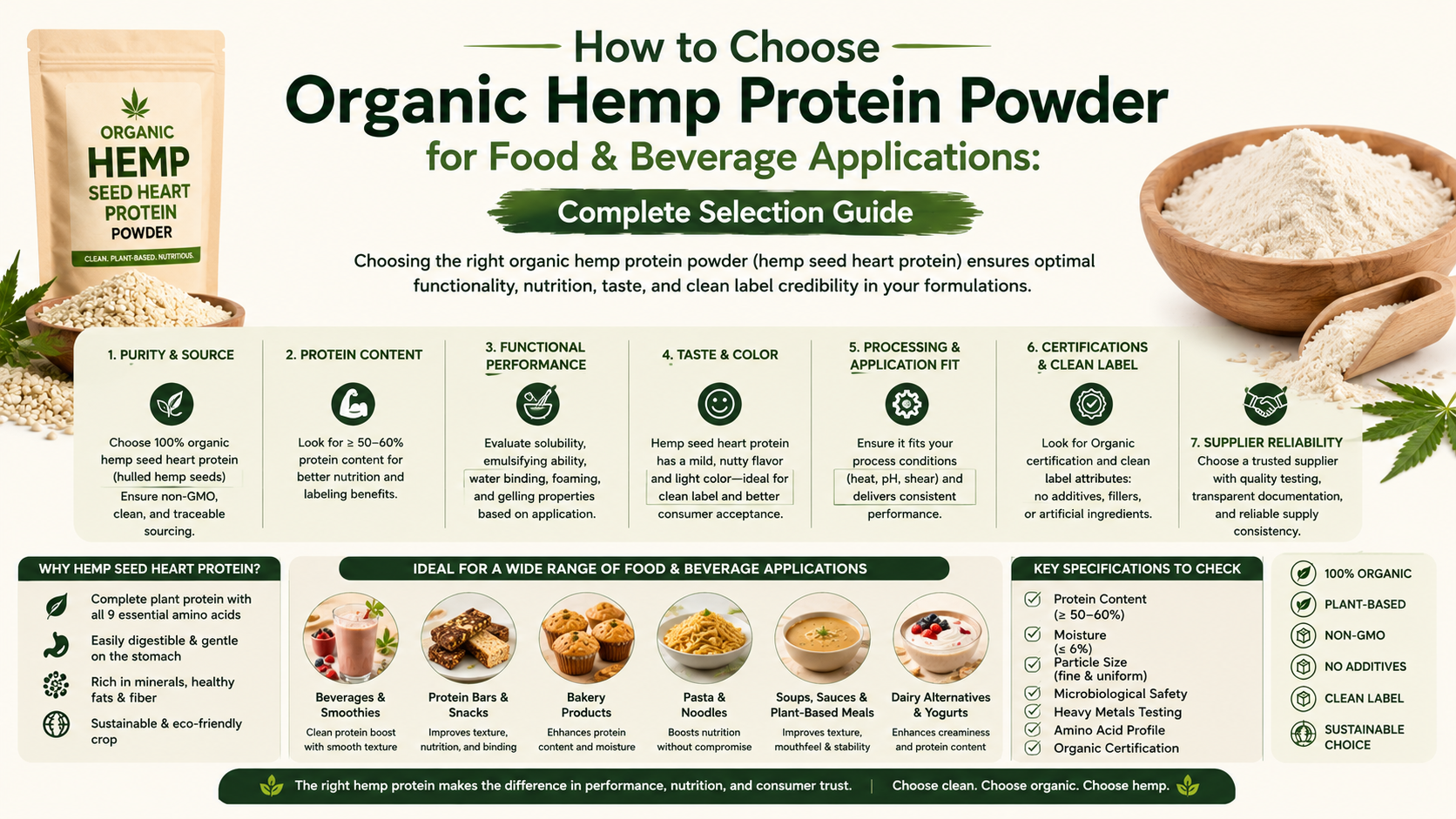
Key Factors That Influence Hemp Protein Performance
Before selecting a specific grade, it is important to understand the variables that affect functional performance:
Protein Concentration (50–65%)
- Lower protein (50–55%): Higher fiber content, more “whole food” positioning, stronger sustainability narrative.
- Higher protein (60–65%): Closer to isolate-style nutrition, may have milder flavor, but lower fiber.
Formulation Trade-off: Higher protein often means lower fiber, which may reduce functionality or clean label appeal depending on the application.
Particle Size (Mesh)
- Fine mesh (80–100+): Better dispersion in beverages, smoother mouthfeel, but may increase cost.
- Medium mesh (40–80): Versatile for bars, baked goods, and dry mixes.
- Coarse mesh (<40): More textured mouthfeel, suitable for whole-food style products.
Formulation Impact: Particle size directly affects dispersion, grittiness, and water absorption.
Fiber Content
- Naturally retained in hemp protein (10–20%)
- Supports gut health claims and clean label positioning
- Affects water binding capacity and texture
Formulation Trade-off: Higher fiber improves nutrition and functionality in bars/bakery, but may create grittiness in beverages.
Color and Appearance
- Natural green-brown tone from chlorophyll and fiber
- Darker shades indicate higher fiber and less processing
- Lighter shades may indicate further refining
Formulation Consideration: Color impacts final product appearance—important for light-colored or neutral-flavored products.
Flavor Intensity
- Mild, nutty, earthy flavor profile
- Intensity varies by protein content and processing method
- Can be overpowering in neutral-flavored products if not carefully managed
Formulation Strategy: Pair hemp protein with complementary flavors (cocoa, coffee, vanilla, nuts, seeds).
Processing Method
- Cold-pressed + milling: Minimal processing, strongest clean label story.
- Further refined: May remove some fiber or color, creating milder flavor and lighter color.
Clean Label Impact: Minimal processing aligns best with clean label expectations.
Application-Based Selection Guide
Beverages and Smoothies
For ready-to-mix drinks, smoothies, and plant-based beverages, dispersion and mouthfeel are critical.
Recommended specifications:
- Protein content: 50–60% (balanced nutrition + fiber)
- Particle size: Fine (80–100+ mesh)
- Fiber content: Moderate (10–15%)
- Flavor intensity: Mild
- Color: Medium (acceptable in chocolate, coffee, or berry-flavored drinks)
Formulation tips:
- Blend hemp protein with other plant proteins or natural stabilizers to improve suspension and texture.
- Pre-hydrate hemp protein before adding to beverage formulations.
- Use natural gums (e.g., guar, xanthan) to improve mouthfeel and reduce grittiness.
Ideal product examples:
- Plant-based protein smoothies
- Ready-to-drink (RTD) protein shakes
- Functional beverages with added fiber claims
Protein Bars and Nutrition Snacks
Bars and snacks benefit from hemp protein’s fiber content and binding properties.
Recommended specifications:
- Protein content: 50–65% (depending on nutrition targets)
- Particle size: Medium (40–80 mesh)
- Fiber content: Higher (15–20%)
- Flavor intensity: Moderate (complements nut/seed flavors)
- Color: Medium-dark (acceptable in whole-food style bars)
Formulation tips:
- Hemp protein works particularly well in seed- or nut-based bars where its natural flavor complements other whole-food ingredients.
- Use hemp protein’s water-binding capacity to improve bar texture and reduce stickiness.
- Combine with hemp seed hearts or other seeds for texture and visual appeal.
Ideal product examples:
- Plant-based protein bars
- Nutrition snack bites
- Energy bars with clean label claims
Bakery and Dry Mixes
In bakery applications, organic hemp protein powder contributes nutrition without heavily altering dough structure when used correctly.
Recommended specifications:
- Protein content: 50–60%
- Particle size: Medium to coarse (20–60 mesh)
- Fiber content: Moderate-high (15–20%)
- Flavor intensity: Moderate (pairs well with whole grains)
- Color: Acceptable in whole-wheat or multi-grain style products
Formulation tips:
- Adjust hydration levels to compensate for hemp protein’s water-binding capacity.
- Start with low inclusion rates (5–10%) and increase gradually.
- Pair with complementary whole-food ingredients (oats, seeds, nuts) for clean label synergy.
Ideal product examples:
- Whole-grain bakery mixes
- Muffins, pancakes, and waffles with added protein
- Dry baking mixes with clean label claims
Sports Nutrition and Meal Replacements
For sports nutrition products positioned around whole-food performance, hemp protein offers a strong nutritional narrative.
Recommended specifications:
- Protein content: Higher (60–65%)
- Particle size: Fine to medium (60–100 mesh)
- Fiber content: Moderate (10–15%)
- Flavor intensity: Mild-moderate
- Certifications: USDA Organic, EU Organic, Non-GMO
Formulation tips:
- Combine hemp protein with other plant-based ingredients (e.g., pea protein for BCAAs, quinoa for amino acid completeness).
- Use natural flavor systems (cocoa, coffee, vanilla) to mask earthy notes if needed.
- Emphasize “whole food nutrition” and “sustainability” in branding.
Ideal product examples:
- Plant-based meal replacement powders
- Post-workout recovery blends
- Sports nutrition products with clean label positioning
How to Select the Right Organic Hemp Protein Powder: 5-Step Framework
Step 1: Define the End Product Format
Clarify whether the product is a:
- Beverage (RTD, powder mix, smoothie)
- Bar or snack (protein bar, energy bite)
- Bakery item (bread, muffin, dry mix)
- Sports nutrition product (powder, meal replacement)
Performance requirements differ significantly by format.
Step 2: Prioritize Label and Certification Needs
Confirm early in the sourcing process:
- Organic certification (USDA Organic, EU Organic)
- Allergen statements (hemp is naturally allergen-friendly)
- Non-GMO status
- Traceability documentation
These factors impact not just compliance, but also brand storytelling.
Step 3: Request Technical Specifications
Ask suppliers for detailed specs on:
- Protein percentage (aim for 50–65% for balanced nutrition)
- Mesh size (impacts dispersion and mouthfeel)
- Moisture content (affects shelf life and stability)
- Microbiological standards (total plate count, yeast, mold, pathogens)
- Heavy metals (lead, cadmium, arsenic, mercury)
- Pesticide residue testing (critical for organic certification)
Pro Tip: Request application-specific recommendations from your supplier—experienced suppliers can suggest the right specification for your product type.
Step 4: Conduct Application Trials
Pilot testing is essential. Even small changes in particle size or fiber content can impact texture and taste.
Trial framework:
- Start with 3–5 sample specifications from different suppliers.
- Test at 2–3 inclusion rates (e.g., 5%, 10%, 15%).
- Evaluate: dispersion, mouthfeel, flavor impact, texture, stability.
- Document results for future scaling.
Pro Tip: Involve your flavorist early if your product requires flavor masking.
Step 5: Evaluate Supply Stability
For commercial production, consistent quality and long-term supply are just as important as functional performance.
Key questions to ask suppliers:
- What is your annual production capacity?
- How do you ensure batch-to-batch consistency?
- What is your typical lead time?
- Can you provide samples for every batch?
- Do you have backup production facilities?
Pro Tip: For large-volume contracts, consider dual-sourcing to mitigate supply risk.
Common Mistakes Buyers Should Avoid
Mistake 1: Choosing Based on Protein Percentage Alone
The problem: Higher protein often means lower fiber, which may reduce functionality or clean label appeal.
The fix: Balance protein content with fiber, flavor, and processing story.
Mistake 2: Ignoring Flavor Intensity in Neutral Formulations
The problem: Hemp protein’s earthy flavor can overpower delicate formulations.
The fix: Request mild-flavor specifications and conduct thorough sensory evaluation.
Mistake 3: Underestimating Water Absorption in Beverages and Bakery
The problem: Hemp protein’s fiber content increases water binding, leading to texture issues.
The fix: Adjust hydration levels and conduct application trials with varying liquid ratios.
Mistake 4: Overlooking Batch-to-Batch Consistency
The problem: Natural ingredients can vary more than highly refined ones.
The fix: Request certificate of analysis (COA) for every batch and establish acceptable variance ranges in your specification.
Mistake 5: Focusing on Price Per Kilogram Instead of Cost Per Function
The problem: Cheaper ingredients may cost more in the long run due to rework, flavor masking, or failed launches.
The fix: Evaluate total formulation cost, including any additional ingredients needed to compensate for functional limitations.
FAQ: Organic Hemp Protein Powder Selection
Is higher protein content always better?
Not necessarily. Higher protein often means lower fiber, which may reduce functionality or clean label appeal depending on the application. Balance is key.
Can one hemp protein powder work for all applications?
In most cases, no. Different formats benefit from different particle sizes and compositions. Beverages need fine mesh; bakery can use medium-coarse.
Does organic hemp protein affect product color?
Yes. Hemp protein typically has a natural green-brown tone, which should be considered in light-colored products. For neutral-colored products, consider:
Using milder-colored hemp protein specifications
Pairing with cocoa, coffee, or berry flavors that mask the color
Using natural color masks (e.g., beet juice powder for pink/red products)
Is hemp protein suitable for children’s or elderly nutrition products?
Yes, when properly formulated. Its digestibility and fiber content make it suitable for balanced nutrition products. However:
For children’s products, ensure mild flavor and smooth texture.
For elderly nutrition, consider ease of digestion and nutrient density.
What documents should B2B buyers request?
Essential documents include:
Organic certificates (USDA, EU, etc.)
COA (Certificate of Analysis) for each batch
Allergen statements (hemp is naturally allergen-friendly)
Microbiological reports
Heavy metal testing results
Pesticide residue reports
Traceability documentation (farm to final product)
How do I evaluate supplier reliability?
Key indicators of a reliable supplier:
Years in business and track record with hemp protein
Production capacity and redundancy
Quality control systems (ISO, HACCP, etc.)
Responsiveness to technical inquiries
Willingness to provide samples and application support
Can hemp protein be blended with other plant proteins?
Absolutely. Blending proteins can create:
Balanced amino acid profiles (e.g., hemp + pea for BCAAs)
Improved functionality (hemp’s fiber + pea’s neutrality)
Cost optimization (base protein + premium differentiation)
Compelling brand storytelling (multiple plant proteins = “plant-powered”)
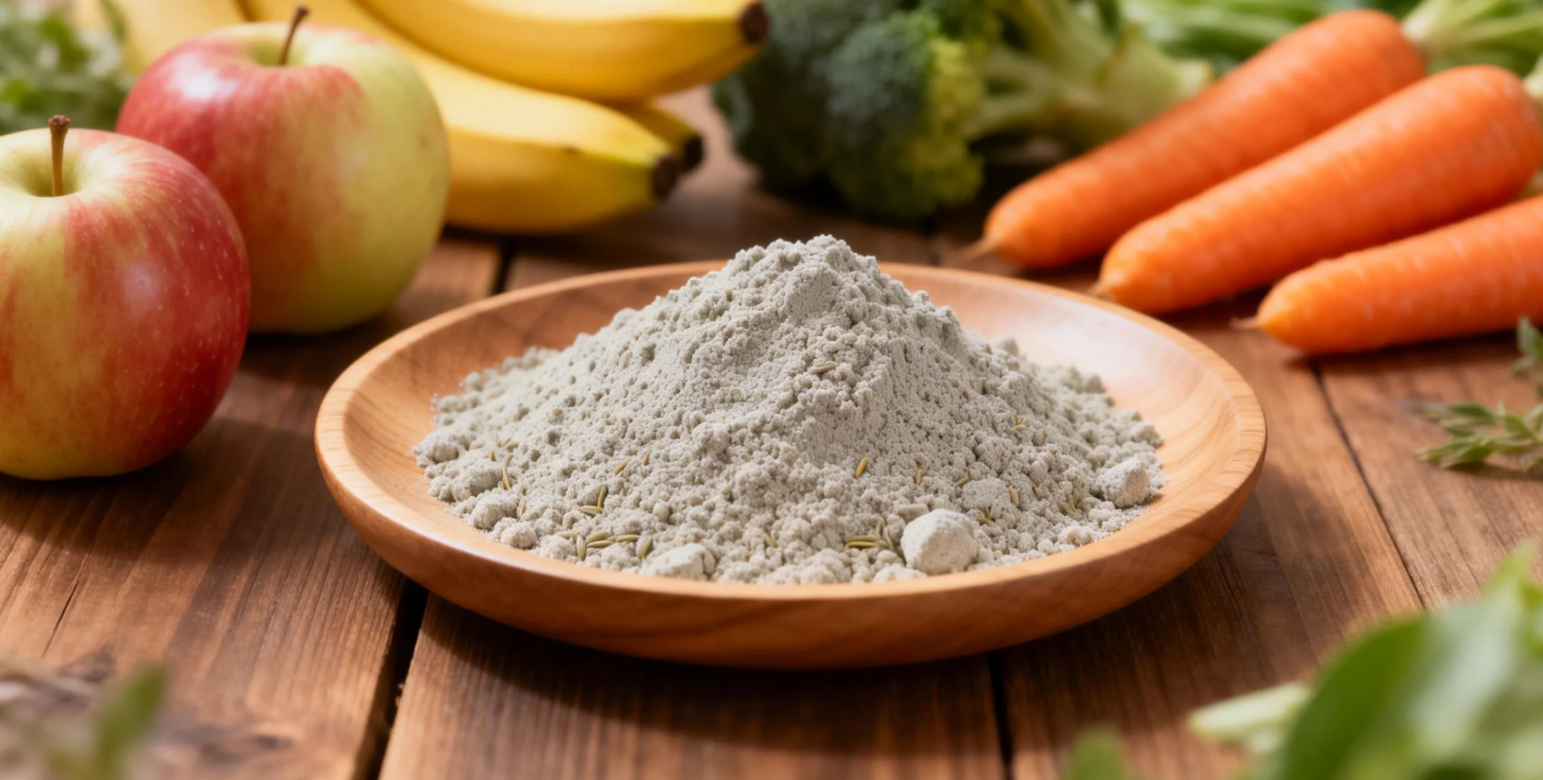
Making Hemp Protein Part of Your Clean Label Strategy
As clean label standards continue to shape consumer expectations, ingredient selection becomes a strategic decision rather than a technical one.
Organic hemp protein powder enables brands to deliver plant-based protein with:
- Transparency (minimal processing, simple label declaration)
- Sustainability (low water use, soil health benefits)
- Nutritional integrity (balanced profile with fiber and minerals)
For manufacturers seeking to future-proof their product lines, organic hemp protein powder represents more than a protein source—it is a statement of values aligned with clean label innovation.
Conclusion: Choose Wisely, Formulate Strategically
Choosing the right organic hemp protein powder is not just a sourcing decision—it is a formulation strategy.
By matching hemp protein specifications to your application, prioritizing clean label values, and conducting thorough application trials, you can create products that deliver on nutrition, functionality, and brand promise.
Next Steps:
- Define your application and performance requirements.
- Request samples from multiple suppliers with detailed specifications.
- Conduct pilot trials with 2–3 inclusion rates.
- Evaluate sensory and functional performance.
- Select the specification that best balances nutrition, functionality, and cost.