
Table of Contents
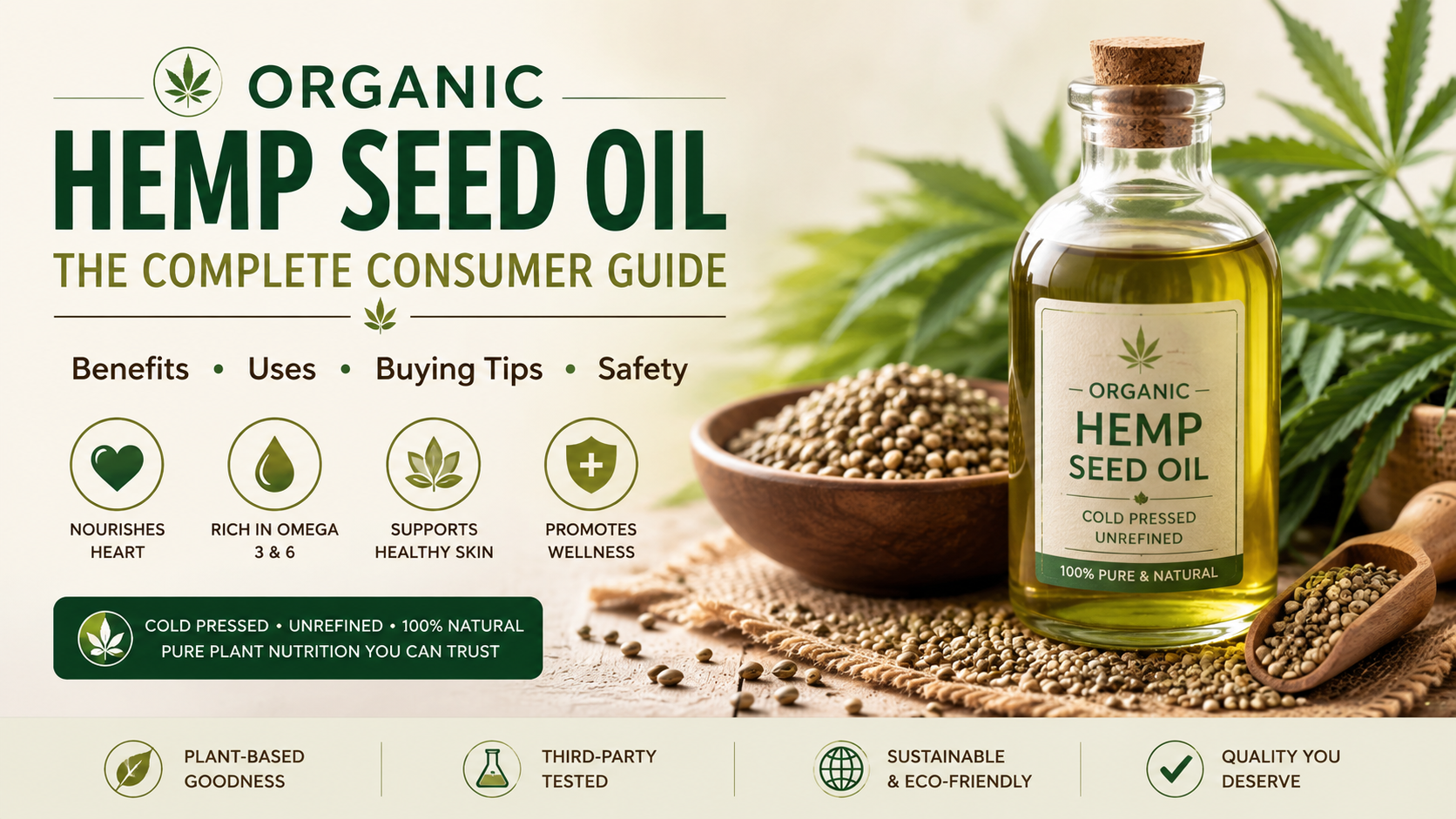
Organic hemp seed oil has earned its reputation as one of the most nutritionally balanced plant oils available. Pressed from the seeds of Cannabis sativa, it delivers an ideal omega fatty acid profile, a full spectrum of vitamins and minerals, and versatile applications that span the kitchen and the bathroom cabinet. This guide covers everything a health-conscious consumer needs to know about choosing, using, and benefiting from organic hemp seed oil safely.
What Is Organic Hemp Seed Oil?
Organic hemp seed oil is extracted by cold-pressing the seeds of the hemp plant, Cannabis sativa. Unlike CBD oil or cannabis products, hemp seed oil contains no cannabinoids or psychoactive compounds. It is purely a nutritional oil valued for its exceptional fatty acid composition.
The defining nutritional feature of hemp seed oil is its omega-6 to omega-3 ratio of approximately 3:1, which closely mirrors the balance recommended by nutritional researchers. It also provides gamma-linolenic acid (GLA), a relatively rare omega-6 fatty acid with anti-inflammatory properties, along with vitamin E, carotenoids, phytosterols, phospholipids, and essential minerals including magnesium, potassium, and iron.
In short, hemp seed oil is a food-grade oil pressed from hemp seeds — not to be confused with CBD oil or any product derived from the flowers or leaves of the plant.
Top Health Benefits
Heart Health
The omega-3 fatty acids in hemp seed oil contribute to cardiovascular wellness by helping reduce LDL cholesterol levels and supporting healthy blood vessel function. GLA further supports this by promoting a balanced inflammatory response. Regular consumption as part of a balanced diet may contribute to improved lipid profiles and overall heart health.
Skin Health
Hemp seed oil is widely recognized for its dermatological benefits. Its GLA content supports the skin’s natural barrier function, making it beneficial for conditions such as eczema, acne, and psoriasis. The vitamin E and antioxidant compounds help protect against oxidative damage and support anti-aging. Applied topically, the oil absorbs easily without clogging pores, providing lightweight moisturization for all skin types.
Anti-Inflammatory Properties
The combination of omega-3 fatty acids and GLA gives hemp seed oil notable anti-inflammatory potential. These compounds help modulate the body’s inflammatory response, supporting joint comfort and overall wellness.
Hormonal Balance
GLA plays a role in supporting hormonal regulation. Research suggests it may help alleviate symptoms associated with premenstrual syndrome (PMS) and ease the transition during menopause, though results vary by individual.
Digestive Health
Hemp seed oil provides phospholipids that support cell membrane integrity throughout the digestive tract. The balanced fatty acid profile may also help maintain a healthy gut environment as part of a gut-friendly diet.
How to Use Hemp Seed Oil in Daily Life
Salad Dressings and Condiments
Hemp seed oil works well as a base for homemade salad dressings. A simple vinaigrette can be made by combining hemp seed oil with fresh lemon juice, apple cider vinegar, a touch of honey, salt, and black pepper. Its nutty flavor complements leafy greens, roasted vegetables, and grain-based salads without overpowering other ingredients.
Cooking Considerations
The smoke point of unrefined hemp seed oil is approximately 330 degrees Fahrenheit (165 degrees Celsius). It is suitable for light sauteing but should not be used for deep frying or high-temperature cooking, as heating above the smoke point degrades the beneficial fatty acids.
Baking Substitution
Hemp seed oil can replace butter in baking recipes at a 1:1 ratio by volume. It works well in muffins, quick breads, and cookies, adding a subtle nutty depth to the flavor profile.
Smoothies and Beverages
Adding one to two tablespoons of hemp seed oil to smoothies is a simple way to boost essential fatty acid intake. It blends well with fruit-based smoothies, green drinks, and protein shakes.
Skincare and Haircare
Applied directly to the skin, hemp seed oil provides lightweight hydration and supports the barrier function. It is non-comedogenic and suitable for sensitive and acne-prone skin. For hair, a small amount massaged into the ends can help reduce breakage and add shine.
Recommended Daily Intake
A common daily intake is one to two tablespoons (15 to 30 milliliters). Start with a smaller amount to assess tolerance and increase gradually as needed.
Culinary Inspiration: Recipes from Around the World
Chinese Flavor: Mapo Tofu
In Sichuan cuisine, hemp seed oil can be used as a finishing drizzle over mapo tofu to add an earthy, nutty dimension that complements the dish’s signature mala (spicy and numbing) profile. Add one to two teaspoons after plating to preserve the oil’s delicate flavor and nutritional integrity.
Indian Flavor: Bhang ki Sabzi
This traditional Indian preparation uses hemp seed oil to create a rich, creamy-textured vegetable dish. The oil lends a distinctive nutty quality that pairs naturally with turmeric, cumin, and coriander.
European Style: Hemp Seed Pesto
A hemp seed pesto replaces or supplements pine nuts and olive oil with hemp seeds and hemp seed oil. Blended with fresh basil, garlic, parmesan (or nutritional yeast), and lemon juice, it creates a vibrant green condiment that works well with pasta, crusty bread, or grilled vegetables.
Australian Style: Hemp Seed Hummus
Adding hemp seed oil and whole hemp seeds to classic hummus elevates the dip with additional protein and omega fatty acids. Use one to two tablespoons of hemp seed oil in place of part of the tahini or olive oil.
Cultural Recipe Quick Reference
| Cuisine | Dish | Role of Hemp Seed Oil | Serving Suggestion |
|---|---|---|---|
| Chinese | Mapo Tofu | Finishing drizzle for nutty depth | 1-2 tsp after plating |
| Indian | Bhang ki Sabzi | Primary cooking oil for creamy texture | Cooked with spices |
| European | Hemp Seed Pesto | Base oil replacing olive oil | With pasta or bread |
| Australian | Hemp Seed Hummus | Blended into dip, drizzled on top | As appetizer or snack |
How to Choose the Best Hemp Seed Oil
Look for Organic Certification
Reputable products carry recognized organic certifications such as USDA Organic or EU Organic. These labels confirm that the hemp was grown without synthetic pesticides, herbicides, or genetically modified organisms.
Cold-Pressed or Mechanically Extracted
The label should specify that the oil is cold-pressed or expeller-pressed. Cold-pressing ensures that the oil is extracted without the use of chemical solvents or high heat, preserving the integrity of the fatty acids, vitamins, and other sensitive nutrients.
Check the Color and Aroma
High-quality cold-pressed hemp seed oil is typically dark green in color, reflecting its chlorophyll content, and has a pleasant, slightly nutty aroma. Pale yellow or colorless oil may indicate over-refining. A rancid or off-putting smell suggests the oil has oxidized.
Dark Glass Packaging
Light exposure accelerates oxidation. Choose products in dark amber or green glass bottles rather than clear glass or plastic.
Storage and Shelf Life
Unopened hemp seed oil typically has a shelf life of 12 to 14 months when stored in a cool, dark place. Once opened, it should be refrigerated and used within three to six months.
Buying Checklist
| Criterion | What to Look For | Red Flag |
|---|---|---|
| Certification | USDA Organic or EU Organic seal | No organic certification |
| Extraction | “Cold-pressed” or “Expeller-pressed” | “Refined” or no method listed |
| Color | Dark green | Pale yellow or clear |
| Aroma | Mild, nutty | Rancid, bitter, or no scent |
| Packaging | Dark amber/green glass | Clear glass or plastic |
| Storage advice | Refrigerate after opening | No storage instructions |
| Shelf life | 12-14 months unopened | Near expiration |
Who Should Avoid Hemp Seed Oil? Safety Precautions
Individuals with Hemp or Pollen Allergies
People allergic to hemp, ragweed, or birch pollen may experience cross-reactivity, including oral allergy syndrome, hives, or in rare cases, anaphylaxis. A patch test is strongly recommended before oral consumption.
Those on Anticoagulant Medications
Hemp seed oil may have a mild blood-thinning effect due to its omega-3 content. Individuals taking anticoagulant or antiplatelet medications should consult their healthcare provider before use.
People with Low Blood Pressure
The GLA in hemp seed oil may contribute to a mild reduction in blood pressure. Those who already have low blood pressure should exercise caution.
Hormone-Sensitive Conditions
Because GLA can influence hormonal activity, individuals with hypothyroidism, estrogen-receptor-positive cancers, or polycystic ovary syndrome (PCOS) should consult a healthcare provider before use.
Before and After Surgery
Hemp seed oil should be discontinued at least two weeks before any scheduled surgical procedure due to its potential blood-thinning effects.
Those Subject to Drug Testing
While hemp seed oil itself contains no THC, trace contamination from processing is possible. Choose products with a certificate of analysis confirming THC levels below detection limits.
Alternative Oil Comparison
| Alternative Oil | Best For | Key Advantage |
|---|---|---|
| Flaxseed oil | High omega-3 intake | Very high ALA content |
| Olive oil | General cooking and heart health | High smoke point, extensively studied |
| Evening primrose oil | GLA supplementation | Higher GLA concentration |
| Coconut oil | High-heat cooking | Very stable at high temperatures |
| Avocado oil | Versatile cooking | High smoke point, mild flavor |
Tolerance Testing Protocol
- Patch test: Apply a small amount of oil to the inside of your forearm and cover with a bandage. Wait 48 hours and check for redness, itching, or swelling.
- Micro-dose: If the patch test is clear, consume approximately one-half teaspoon and wait 24 hours for any adverse reaction.
- Consult a pharmacist: If you are taking any medications, discuss potential interactions before regular use.
Conclusion
Organic hemp seed oil is a nutritionally dense, versatile oil that supports heart health, skin vitality, hormonal balance, and overall wellness. By choosing a cold-pressed, organically certified product in dark glass packaging, storing it properly, and following the safety precautions outlined in this guide, you can make the most of what this balanced natural oil has to offer.