
Table of Contents
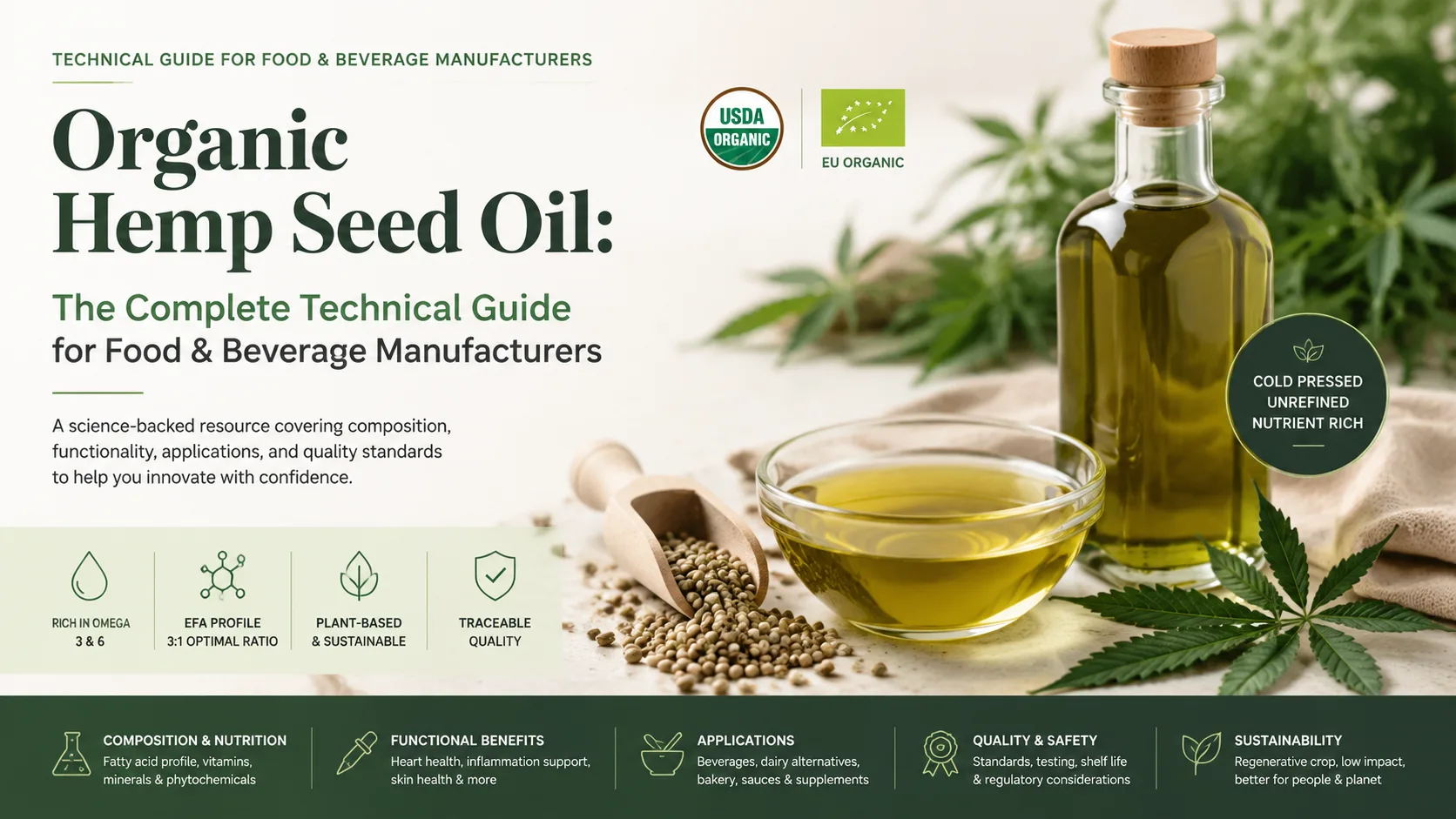
Organic hemp seed oil has emerged as a strategically significant functional ingredient for food and beverage manufacturers navigating the clean-label and omega fatty acid reformulation space. Derived from the seeds of Cannabis sativa L. containing less than 0.3% tetrahydrocannabinol (THC), hemp seed oil delivers a distinctive nutritional profile anchored by an omega-6 to omega-3 ratio of approximately 3:1, complemented by gamma-linolenic acid (GLA), tocopherols, phytosterols, and non-psychotropic cannabinoids. These attributes are fueling rapid market adoption as manufacturers seek differentiated functional ingredients. This article provides the technical specifications, research evidence, application guidelines, and sourcing framework that procurement managers and product development professionals require to incorporate organic hemp seed oil into commercial food and beverage formulations.
Nutritional Profile: What Makes Hemp Seed Oil Unique
Hemp seed oil’s nutritional standing rests on its exceptional fatty acid composition. The oil is cold-pressed from hemp seeds and contains no detectable levels of THC in the finished product when properly processed, making it fully compliant with food safety regulations across major markets.
Fatty Acid Composition
| Fatty Acid | Type | Content (%) |
|---|---|---|
| Linoleic Acid (LA) | Omega-6 | 50-60 |
| Alpha-Linolenic Acid (ALA) | Omega-3 | 15-25 |
| Gamma-Linolenic Acid (GLA) | Omega-6 | 1-4 |
| Oleic Acid | Omega-9 | 8-15 |
| Stearic Acid | Saturated | 1-3 |
| Palmitic Acid | Saturated | 5-9 |
| Other Fatty Acids | Various | < 5 |
The GLA content of 2-4% is particularly notable, as most common culinary oils contain no GLA at all. Borage oil and evening primrose oil — the primary commercial GLA sources — deliver only 1-2% GLA by comparison.
The 3:1 Omega-6:Omega-3 “Goldilocks Ratio”
The omega-6 to omega-3 ratio of approximately 3:1 is the defining nutritional characteristic of hemp seed oil. This balance aligns closely with the human body’s optimal metabolic requirements. Most Western diets deliver ratios of 15:1 or higher, a chronic imbalance linked to systemic inflammation and elevated cardiovascular risk.
Comparative Omega Ratio Table
| Oil | Omega-6:Omega-3 Ratio |
|---|---|
| Hemp Seed Oil | 3:1 |
| Flaxseed Oil | 1:4 (inverted) |
| Olive Oil | 13:1 |
| Coconut Oil | No omega-3 |
| Sunflower Oil | 40:1 |
Phytochemical Composition: Beyond Essential Fatty Acids
Hemp seed oil contains a complex matrix of bioactive compounds that extend its functional value well beyond its fatty acid profile.
Tocopherols
Hemp seed oil is a rich source of tocopherols, predominantly gamma-tocopherol, which exhibits significantly higher antioxidant and anti-inflammatory activity than the alpha-tocopherol dominant in most commercial vitamin E supplements. Gamma-tocopherol demonstrates anticarcinogenic properties and provides potent radical-scavenging activity that protects the oil’s own polyunsaturated fatty acids from oxidation.
Phytosterols
The total phytosterol content of hemp seed oil ranges from 300 to 500 mg per 100 g. Beta-sitosterol, the dominant sterol, has been clinically demonstrated to reduce intestinal cholesterol absorption, lowering LDL cholesterol levels by 5-10% and total cholesterol by 2-5%. Beta-sitosterol also exhibits anti-diabetic and anti-inflammatory activities.
Phenolic Compounds
Hemp seed oil contains non-psychotropic cannabinoids including Cannabidiol (CBD), Cannabigerol (CBG), Cannabichromene (CBC), and Cannabidivarin (CBDV). These compounds interact with the endocannabinoid system and contribute to the oil’s anti-inflammatory and antioxidant properties without any psychoactive effect.
Terpenes
The terpene profile includes beta-caryophyllene and myrcene, both of which exhibit anti-inflammatory and analgesic properties. Beta-caryophyllene acts as a selective agonist of the CB2 receptor, providing a mechanistically distinct anti-inflammatory pathway.
Key Phytochemicals Table
| Compound Class | Key Components | Primary Functions |
|---|---|---|
| Tocopherols | Gamma-tocopherol (dominant) | Antioxidant, anti-inflammatory, anticarcinogenic |
| Phytosterols | Beta-sitosterol | Cholesterol reduction, anti-inflammatory |
| Cannabinoids | CBD, CBG, CBC, CBDV | Endocannabinoid modulation, antioxidant |
| Terpenes | Beta-caryophyllene, myrcene | Anti-inflammatory, analgesic |
Health Benefits Supported by Research
The scientific literature on hemp seed oil spans cardiovascular, dermatological, hormonal, and gastrointestinal health domains.
Cardiovascular Health
Research consistently supports the cardiovascular benefits of regular hemp seed oil consumption. The combination of phytosterols, GLA, and omega-3 polyunsaturated fatty acids addresses multiple risk factors simultaneously. Beta-sitosterol reduces intestinal cholesterol absorption, while GLA and omega-3 fatty acids work synergistically to reduce systemic inflammation and improve lipid profiles.
Anti-Inflammatory Properties
Hemp seed oil’s anti-inflammatory effects are among the most extensively documented properties. A 2011 study demonstrated measurable reductions in chronic inflammatory markers following oral supplementation, findings reinforced by a 2015 clinical investigation that linked GLA-rich oils to sustained anti-inflammatory responses. GLA serves as a direct precursor to dihomo-gamma-linolenic acid (DGLA), which is converted to anti-inflammatory prostaglandin E1 (PGE1), a key regulatory molecule in the resolution of inflammatory cascades.
Skin Health
Topical and dietary applications of hemp seed oil have demonstrated efficacy across several dermatological conditions. A clinical study published in 2014 confirmed the effectiveness of hemp seed oil in reducing acne severity, attributed to its combined anti-inflammatory and sebum-regulating actions. Research from 2005 documented symptom improvements of approximately 40% in atopic dermatitis patients using hemp seed oil topically. Additional clinical evidence supports its use in treating lichen planus (2014 study) and psoriasis (2015 study), where the underlying mechanism involves GLA correcting the fatty acid deficiencies characteristic of these conditions.
Hormonal Balance
GLA plays a significant role in hormonal regulation through its function as a prostaglandin precursor. Prostaglandins derived from GLA help modulate prolactin activity, a hormone directly implicated in premenstrual syndrome (PMS). A 2011 clinical study demonstrated significant PMS symptom reduction with GLA supplementation. Research from 2010, conducted on animal models, indicated potential benefits for menopausal symptom management through GLA-mediated hormonal pathways.
Digestive Health
Hemp seed oil has demonstrated benefits for gastrointestinal health, particularly in managing irritable bowel syndrome (IBS) symptoms. The anti-inflammatory properties of GLA and the lubricating action of the oil’s fatty acid profile contribute to reduced intestinal inflammation. Patients with IBS-related bloating reported reductions of approximately 30% following consistent hemp seed oil supplementation.
Food and Beverage Applications
Organic hemp seed oil is suitable for a range of food and beverage applications. Manufacturers must consider the oil’s oxidative sensitivity when designing formulations and processing protocols.
Culinary and Condiment Applications
Hemp seed oil functions as a premium finishing oil in culinary contexts. It is not recommended for high-temperature cooking due to its high polyunsaturated fatty acid content and corresponding oxidative instability. Optimal applications include salad dressings, marinades, dips, and sauces. The oil imparts a mild, nutty flavour profile that complements Mediterranean, Asian, and plant-based cuisine profiles.
Functional Foods and Beverages
The cardiovascular, anti-inflammatory, and skin health benefits associated with hemp seed oil create compelling functional positioning opportunities. Manufacturers are incorporating the oil into products targeting heart health, digestive wellness, and skin health claims. Hemp seed oil’s naturally occurring gamma-tocopherols provide built-in antioxidant stability, supporting cleaner label formulations.
Plant-Based Products
Hemp seed oil is gaining traction in plant-based product development, particularly as a nutritional complement to protein-rich hemp seed and hemp seed protein ingredients. The balanced fatty acid profile of hemp seed oil addresses a common nutritional gap in plant-based formulations — inadequate omega-3 intake — making it a synergistic ingredient in plant-based meat alternatives, dairy-free products, and vegan supplements.
Dietary Supplements
In the supplement category, hemp seed oil is used in softgel, capsule, and liquid formulations. The growing consumer preference for plant-derived omega-3 sources, combined with concerns about ocean-sourced omega-3 sustainability, positions hemp seed oil as a viable alternative or complement to fish oil and flaxseed oil. Unlike fish oil, hemp seed oil does not carry flavour or odour challenges and is suitable for vegan formulations.
Cosmetic and Topical Applications
Although this article focuses on food and beverage applications, hemp seed oil is also used in cosmeceutical formulations. The EFSA has approved skin health claims for hemp seed oil in cosmetic contexts, and the 40% improvement in atopic dermatitis symptoms documented in clinical studies provides a compelling evidence base for topical product development.
Quality Specifications for Manufacturers
Procurement specifications for organic hemp seed oil must address certification requirements, processing parameters, safety thresholds, and regulatory compliance.
Organic Certifications
Hemp is a known hyperaccumulator of heavy metals and pesticides from soil, making organic certification a non-negotiable requirement for food-grade applications. Manufacturers should verify that suppliers hold one or more of the following certifications:
- USDA Organic (United States)
- EU Organic (European Union)
- China Organic (CNCA)
Third-party verification through accredited certification bodies provides an additional layer of supply chain assurance.
Cold-Pressed vs. Refined: Key Parameters
| Parameter | Cold-Pressed (Food Grade) | Refined |
|---|---|---|
| Acid Value (mg KOH/g) | < 2.0 | < 0.3 |
| Peroxide Value (meq/kg) | < 10 | < 5 |
| Colour | Deep green | Pale yellow |
| Tocopherol Retention | High | Reduced |
| GLA Retention | High | Moderate |
THC Limitations
Regulatory frameworks in most jurisdictions require industrial hemp seed oil for food use to contain less than 0.3% THC. ORGANICWAY supplies hemp seed oil that meets this threshold as a standard specification, with third-party laboratory verification available for each production batch.
Contaminant Standards
- Heavy metals testing: Lead, cadmium, arsenic, mercury below pharmacopeial limits
- Pesticide residue: Compliant with EU Maximum Residue Limits (MRLs) or USDA NOP standards
- Mycotoxin testing: Aflatoxin screening for all batches
- Solvent residue: Zero detectable residual solvents for cold-pressed products
Food Safety Management
Suppliers should operate under documented HACCP systems and hold applicable food safety certifications such as FSSC 22000 or SQF. Certificates of Analysis (COAs) must accompany every batch, including harvest date, best-before date, fatty acid profile, and peroxide value data.
Sourcing Considerations
Major Producing Regions
China is the leading global producer of industrial hemp seed oil, commanding approximately 30% of the international market share. Canada and several European countries — particularly France, Germany, and Austria — are also significant producers. ORGANICWAY supplies certified organic hemp seed oil from Shaanxi Province, an established hemp cultivation region with a dedicated organic agricultural base.
The Organic Imperative
Hemp is a hyperaccumulator — a plant species capable of absorbing and concentrating heavy metals and chemical contaminants from soil at levels far exceeding those of surrounding vegetation. This characteristic makes organic cultivation not merely preferable but essential for food-grade applications. Conventional hemp crops risk concentrating cadmium, lead, and pesticide residues in the harvested seed oil at levels that exceed food safety thresholds.
Supply Chain Traceability
- Seed origin and hemp variety documentation
- Organic certification certificates for each processing stage
- Batch-specific COAs covering all quality and safety parameters
- Cold chain temperature monitoring records
- Third-party audit reports

Conclusion
Organic hemp seed oil represents a technically differentiated functional ingredient with a compelling combination of nutritional, phytochemical, and applicative attributes. Its approximately 3:1 omega-6 to omega-3 ratio, 2-4% GLA content, gamma-tocopherol and phytosterol profile, and non-psychotropic cannabinoid matrix collectively position it as a premium ingredient for manufacturers developing clean-label, functional, and plant-based products. Successful commercial integration requires rigorous sourcing from organically certified supply chains, careful attention to cold-chain integrity and oxidative stability, and compliance with applicable THC and contaminant standards. ORGANICWAY Food Ingredients Inc. supplies fully certified organic hemp seed oil meeting international food safety and quality specifications for B2B customers worldwide.