Table of Contents
What is organic erythritol?
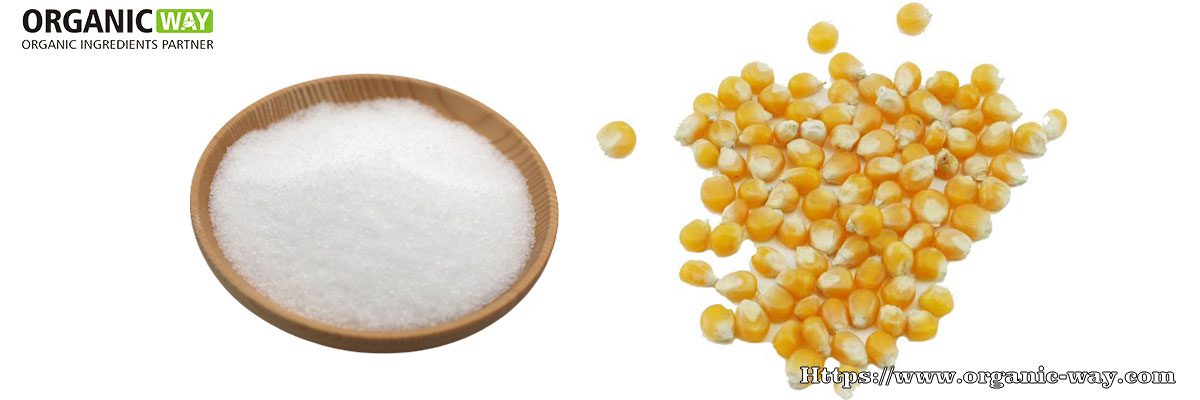
Organic Erythritol (systematic name: meso-erythritol; CAS 149-32-6; EINECS 205-737-3; molecular formula C₄H₁₀O₄; molecular weight 122.12 g/mol) is a four-carbon sugar alcohol (polyol) occurring naturally in trace amounts in fruits such as grapes, pears, and melons, as well as in fermented foods like soy sauce and cheese. Commercially, it is produced through aerobic fermentation using food-grade strains of Blakeslea trispora, Moniliella pollinis, or Pseudozyma aphidis — fed on organic glucose derived from certified organic, non-GMO corn starch.
What distinguishes erythritol from all other polyols is its uniquely high digestive tolerance — a property rooted in its metabolic pathway. Over 90% of ingested erythritol is absorbed passively in the small intestine and excreted unchanged in urine within 24 hours, without entering the colon where fermentation (and associated bloating, gas, and osmotic diarrhea) occurs. This makes erythritol the best-tolerated sugar alcohol available, suitable for daily consumption by the broadest consumer base.

Functional Characteristics:
- Caloric value: ~0.2 kcal/g — globally regulated as “zero calorie” (EU 1169/2011: <4 kcal/g qualifies as “zero”; US FDA 21 CFR 101.60: <5 calories qualifies as “zero”)
- Glycemic index: 0 — no effect on blood glucose or insulin response
- Sweetness: ~70% of sucrose by weight; blends synergistically with high-intensity sweeteners (stevia, monk fruit, sucralose) at ratios that mask bitterness and improve overall taste profile
- Cooling sensation: Erythritol has a negative heat of solution (~−43 cal/g), producing a mild cooling effect in the mouth — desirable in mint and chewing gum applications; a differentiating sensory feature to communicate to formulators
- Solubility: Highly soluble in water (61 g/100 mL at 25°C); not hygroscopic; free-flowing crystalline structure resists caking
- Cariogenicity: Non-fermentable by oral bacteria; contributes to reduced dental plaque formation
- Chemical stability: Thermally stable up to 160°C; stable across wide pH range (2–12); does not participate in Maillard browning reactions
Certifications Available
USDA Organic, Non-GMO Project Verified, Vegan, Gluten-Free. Kosher and Halal certifications — confirm with supplier before labeling.
Minimum Order Quantity
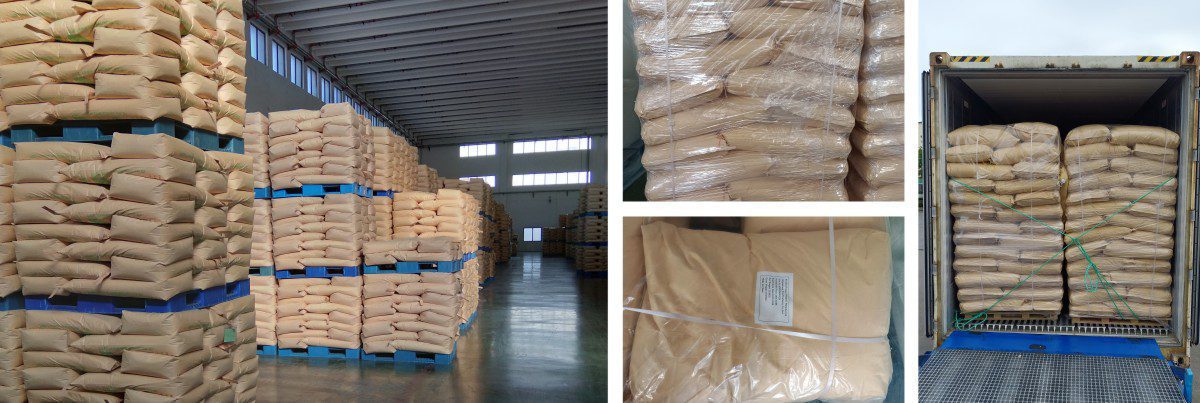
Sample quantities available for specification verification. Commercial volumes in 25 kg drums. Contact sales for quotation and lead time.
PHYSICAL & CHEMICAL PROPERTIES
Product Specifications
| Parameter | Specification | Test Method |
|---|---|---|
| Chemical Name | meso-Erythritol | — |
| CAS Number | 149-32-6 | — |
| EINECS | 205-737-3 | — |
| Molecular Formula | C₄H₁₀O₄ | — |
| Molecular Weight | 122.12 g/mol | — |
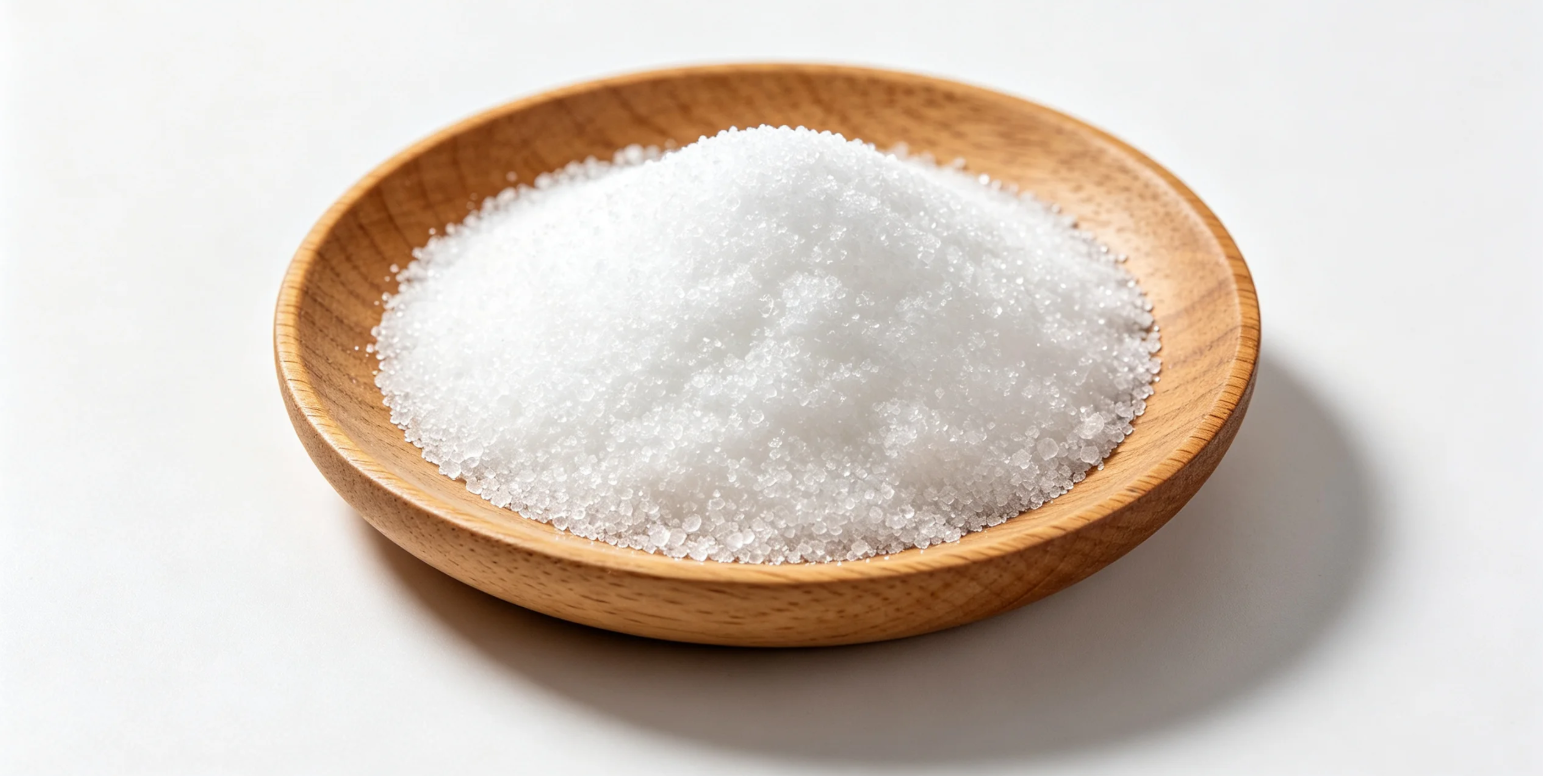
| Appearance | Fine, white crystalline powder | Visual |
| Odor | Odorless | Organoleptic |
| Taste | Clean, sweet with mild cooling sensation | Organoleptic |
| Purity (dry basis) | ≥99.5% | HPLC |
| Loss on Drying | ≤0.5% | Gravimetric (105°C, 2h) |
| Residue on Ignition (Ash) | ≤0.1% | Gravimetric (550°C) |
| pH (10% aqueous solution) | 4.5–7.0 | Potentiometric |
| Melting Point | 118–121°C | DSC / Capillary |
| Particle Size (Standard) | 100 mesh (≤150 μm); 20–60 mesh (250–850 μm) or as specified | Sieve analysis |
| Bulk Density | 0.55–0.70 g/mL | Volumetric |
| Heavy Metals | ≤10 mg/kg total heavy metals | ICP-OES |
| Lead | ≤0.5 mg/kg | ICP-OES |
| Arsenic | ≤0.5 mg/kg | ICP-OES |
| Microbiological — Total Plate Count | ≤1,000 CFU/g | ISO 4833 |
| Microbiological — Yeast & Mold | ≤100 CFU/g | ISO 21527 |
| Microbiological — E. coli | Negative in 1g | ISO 16649 |
Note on Mesh Sizes: Standard 100-mesh is recommended for beverages, powdered formulations, and tableting. Coarser 20–60 mesh provides better flow properties for mechanized handling. Custom mesh specifications are available — confirm with supplier.
GRAS / Regulatory Status
| Jurisdiction | Status | Reference |
|---|---|---|
| United States | GRAS Notice GRN 790 (pending latest update); commonly self-affirmed GRAS | FDA 21 CFR 184.5355 |
| European Union | Authorized as food additive E 968; sweetener and humectant | Reg (EC) No 1333/2008; Reg (EU) No 231/2012 |
| China (GB) | Approved as food additive; E 968 | GB 2760-2014 |
| Japan | Existing food additive; no limits specified | JSFA Japan |
| Canada | Permitted as sweetener | Health Canada — Food and Drug Regulations |
| CODEX Alimentarius | Included in Tables Three and Five | CODEX STAN 212-1999 |
| JECFA | ADI “not specified” — considered safe | JECFA 46th Report |
LABEL COMPLIANCE & REGULATORY REFERENCE
EU Food Labeling (Regulation 1169/2011)
- Energy: 0 kJ / 0 kcal per 100 g (zero-calorie claim permitted; actual value ~4 kJ/g = ~0.2 kcal/g, well below the “zero” declaration threshold of <4 kcal/100 g)
- Sweetener designation: E 968
- Sweetener label name: “Erythritol” or “sweetener: erythritol” as ingredient
- “Sweetened” claim: Products using erythritol in combination with intense sweeteners must use the EU-compulsory “sweetened” statement on the label
- “With Sugar” / “No Added Sugar” claims: Products using erythritol may qualify for “with sweetener(s)” / “no added sugar” claims depending on other ingredients — verify against Reg 1924/2006
US FDA Labeling
- Calories: 0 per serving (≤5 cal/serving qualifies as zero)
- Sugars: 0 g (erythritol is not a “sugar” per FDA definition)
- Sugar Alcohols: May be declared as “sugar alcohol” on the line below Total Carbohydrate; grams of erythritol may be listed in the sub-list
- “Reduced Calorie” / “Sugar-Free” / “No Added Sugar”: Erythritol use can support these claims — verify against 21 CFR 101.60, 101.65
- Allergen declaration: Not required (corn source is processed below thresholds per FALCPA; verify with supplier if allergen-free labeling is required)
Gluten-Free and Allergen Declarations
- Gluten: Not present (corn source, no gluten-containing ingredients in fermentation); suitable for gluten-free labeling per FDA 21 CFR 101.91 and EU Reg 41/2009
- Allergens (EU/FALCPA): Corn is not a “major allergen” in EU or US frameworks; no allergen declaration required unless specific market requires it
- Vegan: Yes — no animal-derived inputs in production
- Halal: Confirm with supplier — some fermentation carriers may involve inputs requiring Halal certification; request certificate if needed
CERTIFICATIONS & VERIFICATION
| Certification | Status |
|---|---|
| USDA Organic | NOP-compliant organic input; USDA seal eligible |
| EU Organic | EU Reg 2018/848 compliant |
| Non-GMO Project Verified | Non-GMO input and processing |
| Vegan / Vegetarian | No animal-derived inputs or processing aids |
| Gluten-Free | Available |
| Kosher | Available |
| Halal | Available |
| FSSC 22000 / ISO 22000 | Available |
Important: Confirm Kosher, Halal, and FSSC 22000 certifications directly with the supplier prior to labeling. The product page does not explicitly list these — request documentation.
KEY FEATURES & FUNCTIONAL ADVANTAGES
Metabolic Profile
| Characteristic | Erythritol | Sucrose | Sorbitol | Xylitol | Maltitol |
|---|---|---|---|---|---|
| Sweetness (% sucrose) | ~70% | 100% | ~60% | ~100% | ~90% |
| Caloric value (kcal/g) | 0.2 (label: 0) | 4.0 | 2.6 | 2.4 | 2.1 |
| Glycemic Index | 0 | 65 | 9 | 12 | 35 |
| Insulin response | None | Moderate | Low | Low | Low |
| Digestive tolerance (single dose) | Up to 0.8 g/kg body weight | — | ≤30 g | ≤50 g | ≤30 g |
| Laxative threshold (typical adult) | ~0.8 g/kg BW | — | 20–30 g | 30–50 g | 20–30 g |
| Net Carb impact | Zero | High | Low | Low | Low |
| Maillard browning | No | Yes | No | No | No |
| Cooling sensation | Yes | No | Slight | No | No |
Why Digestive Tolerance Matters: The most significant practical advantage of erythritol over sorbitol, xylitol, and maltitol is its superior digestive tolerance. The European Food Safety Authority (EFSA) has authorized a health claim for erythritol’s digestive tolerance benefit (EFSA Journal 2015). Formulators targeting sensitive consumer groups (children, elderly, gut-health products) should prioritize erythritol over other polyols.
Flavor and Sensory Profile
- Taste: Clean, sweet taste closely resembling sucrose; no metallic, bitter, or licorice aftertaste
- Cooling sensation: Mild cooling in the mouth (negative heat of solution) — beneficial for mint and gum applications; can be perceived as unfamiliar in some sweet applications and should be communicated to formulation teams
- Aftertaste: Short, clean; no lingering bitterness
- Synergy with High-Intensity Sweeteners: Combining erythritol with stevia, monk fruit, or sucralose at ratios of 90–99% erythritol / 1–10% high-intensity sweetener effectively masks the bitterness and metallic notes of the latter while maintaining near-1:1 bulk replacement of sugar’s volume
Functional Advantages in Formulation
| Property | Benefit | Application |
|---|---|---|
| Zero glycemic impact | Safe for diabetic consumers | Diabetic-friendly products |
| Non-cariogenic | Does not feed oral bacteria | Sugar-free gum, mints, toothpaste |
| Thermally stable | Survives baking temperatures | Baked goods, confectionery |
| Non-hygroscopic | Free-flowing; resists caking | Powdered beverages, tabletop sweeteners |
| pH stable (2–12) | Survives acidic and alkaline conditions | Carbonated beverages,腌制食品 |
| Non-fermentable by gut microbes | Minimal gut distress at normal doses | Gut-health products |
| Free-flowing crystalline structure | Excellent flow in automated dosing | Tableting, powder handling |
INDUSTRIAL APPLICATIONS
Bakery & Confectionery
- Reduced-sugar cookies, cakes, muffins: Replace up to 50–70% of sucrose weight with erythritol; blend with stevia or monk fruit for full sweetness
- Sugar-free chocolate: Erythritol is the primary bulk sweetener in most commercial sugar-free chocolate formulations; its crystalline structure mimics sucrose’s mouthfeel
- Hard candies and mints: Erythritol’s cooling effect and high solubility make it ideal for compressed mints and chewing gum; stable at high temperatures
- Coating and dusting powder: Non-caking, free-flowing; used as dusting agent for gummy candies, dried fruits, and snack foods
Beverages
- Zero-calorie flavored water, sparkling water, and RTD drinks: Dissolves cleanly without cloudiness or off-notes; stable in acidic environments
- Protein shakes and meal replacement shakes: Does not interfere with protein flavor; masks bitterness of added vitamins and minerals
- Powdered drink mixes: Free-flowing, non-hygroscopic; stable in dry mix formats
- Hot beverages: Erythritol dissolves less readily in very hot liquids than in cold — consider pre-dissolving or using in RTD/cold brew formats
Dairy and Frozen Desserts
- Sugar-free/low-carb ice cream: Provides bulk and mouthfeel; note: erythritol can lower the freezing point, resulting in a harder texture at freezer temperatures — blending with sorbitol or glycerol improves texture
- Greek yogurt and plant-based yogurt: Does not mask probiotic cultures; supports clean-label positioning
- Frozen novelties: Same considerations as ice cream
Snacks and Nutritional Bars
- Protein bars and keto bars: Primary bulk sweetener and texturizer; pairs with nuts, seeds, and cocoa
- Trail mix and granola: Used as a coating agent for clusters
- Coated nuts and seeds: Dusting agent with clean sweetness
Tabletop Sweeteners
- Individual packets: Free-flowing powder, consistent density; ideal for single-serve tabletop packaging
- Bulk canisters: For foodservice and manufacturing use
- Blend with stevia/monk fruit: Pre-blended sweetener mixes are the fastest-growing erythritol format
Pharmaceutical and Nutraceutical
- Tableting: Excellent compressibility; serves as inert filler and sweetener in tablets and chewables
- Chewable vitamins and supplements: Masking agent for mineral aftertaste; supports clean-label claims
- Functional gummies: Partial sugar replacement (typically 30–50%); note the different gel texture profile vs. gelatin/sucrose gummies
Cosmetics and Personal Care
- Mouthwash and toothpaste: Non-cariogenic sweetener; stable in aqueous alcohol formulations
- Body powder: Absent of moisture absorption; skin-safe
SUBSTITUTION GUIDE & FORMULATION TIPS
Direct 1:1 Replacement of Sucrose — Not Recommended
Erythritol is approximately 70% as sweet as sucrose. Direct 1:1 weight replacement will produce a significantly less sweet product. The standard correction factor is:
Required erythritol weight = Target sucrose sweetness × (100 ÷ 70) ≈ sucrose weight × 1.43
Worked example: To match the sweetness of 100 g sucrose in a recipe:
- Erythritol needed: ~143 g (approximately 43% more by weight)
- Alternatively: 100 g erythritol + ~15–20 mg stevia extract (Reb A 95%) for closer sweetness match
Sweetness Replacement Matrix
| Application | Erythritol Replacement Level | Notes |
|---|---|---|
| Standard sweetening (drinks, desserts) | 100–120% of sucrose weight | + stevia blend for full sweetness |
| Confectionery (chocolate) | 80–100% of sucrose weight | Typically requires stevia/monk fruit boost |
| Baking (cakes, cookies) | 70–80% of sucrose weight + moisture adjustment | May require increasing other liquids by 15–25% |
| Protein bars | 50–70% of sucrose weight | Combined with other sweeteners |
| Tabletop / single-serve | 100% (1:1 perceived sweetness) | Pre-blended with high-intensity sweetener |
Formulation Adjustments When Replacing Sugar with Erythritol
| Parameter | Sugar → Erythritol Adjustment | Reason |
|---|---|---|
| Sweetness | Increase erythritol weight by ~43% | Lower relative sweetness |
| Texture/bulk | Add bulking agent (fiber, inulin, resistant starch) | Erythritol provides less volume per sweetness unit |
| Moisture | Increase liquid by 10–20% | Erythritol does not retain moisture like sucrose |
| Browning | Use alternative for Maillard color | Erythritol does not brown |
| Freezing point (frozen desserts) | Lower setting temperature; expect harder texture | Erythritol lowers freezing point significantly |
| Digestive tolerance | Stay below ~0.8 g/kg adult body weight per serving | Minimizes laxative risk |
Recommended Blend Ratios for Common Combinations
| Blend Composition | Best For |
|---|---|
| Erythritol 99% + Stevia (Reb A 95%) 1% | Chocolate, confectionery, tabletop packets |
| Erythritol 95% + Monk Fruit 5% | RTD beverages, protein shakes |
| Erythritol 90% + Allulose 10% | Baking (improved browning via allulose) |
| Erythritol 70% + Stevia 0.5% + Insoluble fiber 29.5% | Keto snack bars |
FAQ
Q1: What is the source of the organic glucose used to produce your erythritol?
A: The organic glucose is derived from certified organic, non-GMO corn starch via enzymatic hydrolysis. The fermentation organisms (Moniliella pollinis or equivalent food-grade strain) are fed on this organic glucose substrate. We can provide the organic certificate and non-GMO traceability documentation upon request, including a complete chain of custody from corn seed to finished powder.
Q2: How does erythritol’s digestive tolerance compare to other sugar alcohols?
A: Erythritol has the best digestive tolerance profile of all commercially used sugar alcohols. Over 90% is absorbed in the small intestine and excreted unchanged in urine — it never reaches the colon where fermentation causes bloating and osmotic diarrhea. The laxative threshold for erythritol in adults is approximately 0.8 g per kg of body weight in a single meal (vs. 0.3–0.5 g/kg for sorbitol and xylitol). EFSA has authorized a health claim stating that erythritol is well tolerated at doses up to 0.6 g/kg body weight per day in the context of sugar-free confectionery.
Q3: Does erythritol have any impact on blood glucose or insulin?
A: No. Erythritol is not metabolized for energy. Its glycemic index is 0, and it does not trigger an insulin response. It is fully suitable for diabetic, ketogenic, and low-carb dietary formulations. Note: erythritol is absorbed and excreted unchanged — it does not feed gut microbiota in the colon, making it a truly non-metabolic carbohydrate.
Q4: Why does erythritol produce a cooling sensation in the mouth?
A: Erythritol has a negative heat of solution (approximately −43 cal/g), meaning it absorbs heat when dissolving in saliva. This produces a mild cooling effect — the same physical principle as menthol. In mint and chewing gum applications, this is a desired attribute. In other sweet applications (e.g., chocolate, fruit flavors), formulation teams should be aware of this sensory characteristic. If undesirable, blending with allulose or sucrose reduces the perceived cooling effect.
Q5: Can erythritol be used in hot beverages?
A: Erythritol is highly soluble in cold and warm liquids but has lower solubility in very hot liquids compared to sucrose. At near-boiling temperatures (>90°C), dissolution may be slower. For hot beverage applications, pre-dissolving erythritol in a small amount of warm water before adding to the beverage, or using a fine mesh grade (100 mesh or finer), is recommended. Erythritol is stable at temperatures up to 160°C and does not caramelize or brown — it is stable through baking and cooking processes.
Q6: Is your erythritol certified Kosher and Halal?
A: Action Required — Confirm with supplier. Kosher and Halal certifications are not explicitly stated on the product page. Please request the Kosher certificate (from a recognized agency such as OU, OK, or Star-K) and Halal certificate (from a recognized Islamic certification body) before using them on product labels or marketing materials.
Q7: What mesh sizes are available and which should I choose?
A: Two standard grades are available:
100 mesh (≤150 μm): Fine powder — best for beverages, powdered drink mixes, and tableting. Provides rapid dissolution and uniform distribution.
20–60 mesh (250–850 μm): Coarser granules — better flow properties for automated handling, less dust, better metering accuracy in continuous-process manufacturing. Custom particle size distributions are available for specific formulation requirements. Contact sales for availability and MOQ.
Q8: What is the typical shelf life and storage condition?
A: Shelf life is 24–36 months from production date when stored in original unopened packaging under cool, dry conditions. Storage recommendation: temperature below 24°C (75°F), relative humidity below 65%, protected from direct sunlight and strong odors. Erythritol is non-hygroscopic and resists caking under normal storage conditions. Once opened, use standard FIFO (First In, First Out) handling. Storage in airtight containers after opening is recommended to prevent contamination.
Packing