


Table of Contents
Confectionery and chocolate products are among the most sugar-dependent categories in the food industry. Sugar contributes not only sweetness, but also structure, mouthfeel, crystallization control, and shelf stability. As consumer demand for reduced-sugar treats grows, manufacturers face a difficult challenge: lowering sugar without compromising indulgence.
Organic allulose syrup offers a highly functional and clean-label solution for confectionery and chocolate applications. By closely mimicking the behavior of traditional sugars while delivering fewer calories, it enables meaningful sugar reduction without sacrificing product quality.
The Role of Sugar in Confectionery and Chocolate
In confectionery systems, sugar influences multiple critical parameters, including:
- Sweetness intensity and flavor release
- Texture and chewiness
- Crystallization and stability
- Moisture control
- Visual appearance and gloss
When sugar is removed or replaced incorrectly, products may become gritty, overly hard, sticky, or lack flavor depth. Organic allulose syrup addresses these issues by delivering both sweetening and functional performance.
Why Organic Allulose Syrup Works in Confectionery Applications
Organic allulose is a rare sugar with approximately 70% of the sweetness of sucrose. In syrup form, it provides consistent performance across a range of confectionery formats.
Key benefits include:
- Clean, sugar-like sweetness with no bitterness
- Improved moisture retention
- Reduced risk of uncontrolled crystallization
- No cooling effect, unlike many polyols
These attributes make it especially valuable in premium and reduced-sugar confectionery products.
Applications Across Confectionery and Chocolate Categories
1. Chocolate and Chocolate Coatings
Organic allulose syrup can help reduce added sugars while maintaining sweetness balance and mouthfeel. It supports smoother texture and improved flavor release when used in combination with other sweeteners.
2. Gummies and Chewy Candies
In gummy systems, organic allulose syrup contributes to softness, elasticity, and long-lasting chew without excessive stickiness.
3. Caramels and Toffees
Helps manage moisture and prevent overly hard textures in reduced-sugar formulations.
4. Filled and Layered Confectionery
Supports stable fillings by improving viscosity and moisture control.
How To Use Organic Allulose Syrup in Confectionery Formulations
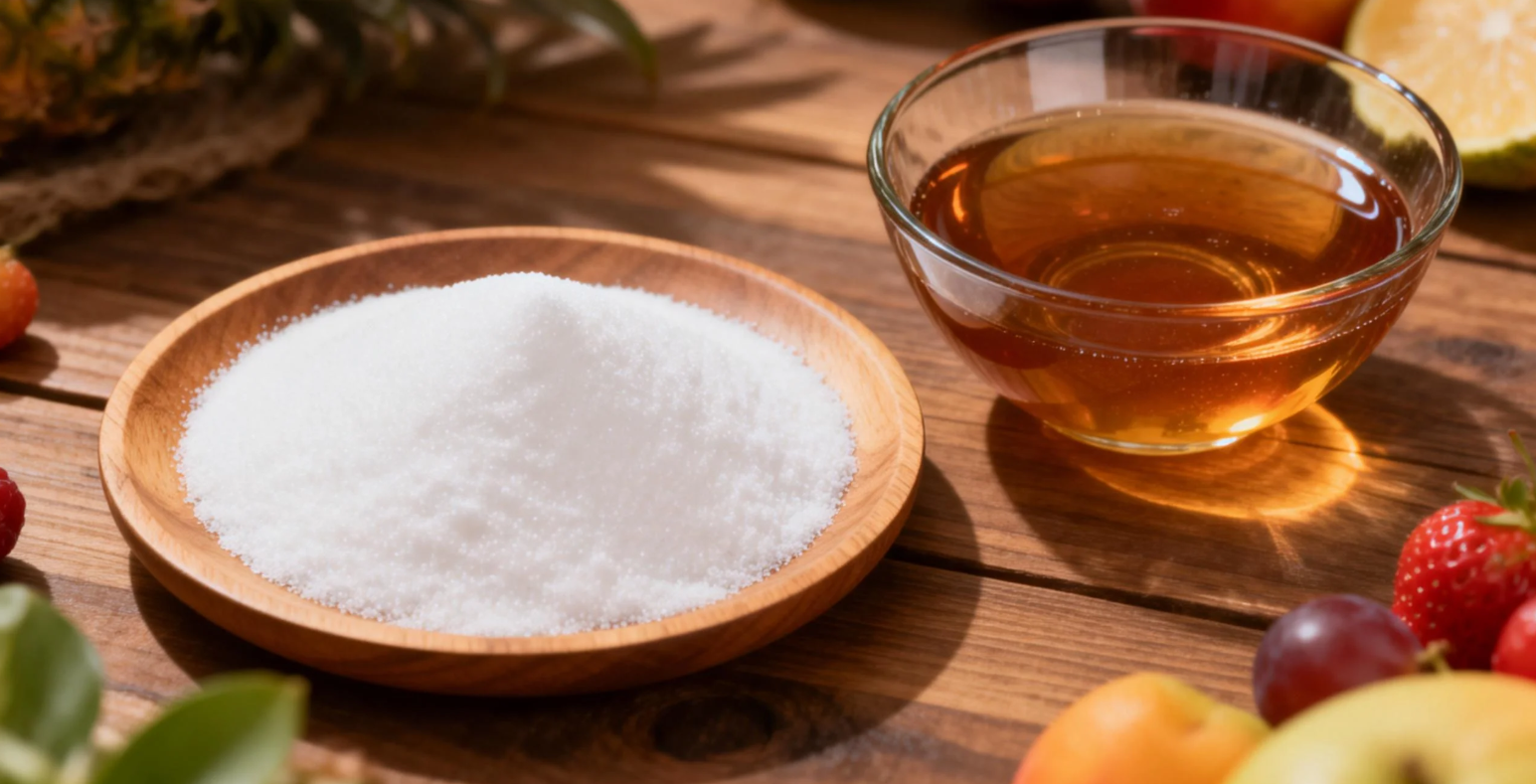
Using Organic Allulose Syrup in Confectionery Formulations
Step 1: Identify the Functional Role of Sugar
Determine whether sugar in your formulation primarily contributes to sweetness, texture, moisture, or crystallization control. Organic allulose syrup is particularly effective when sugar plays multiple roles.
Step 2: Partial Replacement Strategy
Start by replacing 20–50% of traditional sugars with organic allulose syrup. This allows you to evaluate sweetness balance and texture without major process changes.
Step 3: Adjust Solids and Moisture
Because organic allulose syrup adds liquid solids, minor adjustments to water content or dry ingredients may be necessary to achieve optimal consistency.
Step 4: Process Optimization
Organic allulose syrup performs well under typical heating and cooling conditions used in confectionery manufacturing. Monitor temperature and shear to ensure consistent texture.
Step 5: Sensory and Shelf-Life Testing
Evaluate chewiness, sweetness perception, and stability over time. Organic allulose syrup often improves softness retention during storage.
Clean Label and Premium Positioning
Modern confectionery consumers increasingly seek indulgence with transparency. Organic allulose syrup supports:
- Clean-label ingredient lists
- Organic product development
- Reduced-sugar positioning
- Premium brand storytelling
These advantages make it suitable for both mainstream and specialty confectionery brands.
Comparison With Other Sugar Reduction Solutions
Compared to commonly used alternatives:
- High-intensity sweeteners: Provide sweetness but no structure or texture
- Erythritol: Can cause cooling effect and crystallization issues
- Fibers alone: Improve nutrition but may negatively impact mouthfeel
Organic allulose syrup bridges the gap between sweetness and functionality, making it a core ingredient rather than a supporting additive.
FAQ: Organic Allulose Syrup in Confectionery & Chocolate
Is organic allulose syrup suitable for chocolate applications?
Yes. When properly formulated, organic allulose syrup supports sweetness balance and smooth texture, especially in chocolate fillings and coatings.
Does organic allulose syrup crystallize like sugar?
Organic allulose has lower crystallization tendency than sucrose, which helps improve texture stability in chewy and soft confectionery products.
Can organic allulose syrup be used in sugar-free or no-added-sugar candies?
It is commonly used in reduced-sugar formulations. Claim eligibility depends on regional regulations and total formulation.
Does it affect flavor release?
Organic allulose syrup provides clean sweetness and often enhances flavor release without masking delicate notes.
Is organic allulose syrup compatible with organic certification?
Yes, when sourced and processed according to organic standards, it can be used in certified organic confectionery products.
Conclusion
For confectionery and chocolate manufacturers, organic allulose syrup offers a strategic solution to sugar reduction challenges. By delivering sweetness, texture, and moisture control in one ingredient, it enables innovation without compromising indulgence.
As reduced-sugar confectionery continues to grow, organic allulose syrup is becoming an essential tool for brands seeking to balance taste, functionality, and clean-label expectations.
Related Products

Organic Allulose Sweetener
Source premium Organic Allulose Powder and Syrup. A clean-label, low-calorie, non-glycemic rare…

Organic Erythritol
Appearance: White Crystalline Powder Or Particles Other Name: Erythritol sweetener, Erythritol sugar,…