


Table of Contents
What is Organic Polydextrose Powder?
Organic Polydextrose is supplied in two specifications — powder and syrup — both derived from 100% organic non-GMO corn through the same fundamental enzymatic polymerization process. The process links glucose monomers, sorbitol, and citric acid into a random polymer chain that human digestive enzymes cannot break down, converting it from a digestible carbohydrate into a water-soluble dietary fiber. This is the defining characteristic of polydextrose: it provides the bulk, texture, and functional behavior of a carbohydrate in food formulations while contributing only 1 kcal/g — one quarter the caloric density of sucrose — and functioning as a prebiotic that nourishes beneficial gut bacteria.
The Glycemic Index of 7 or less positions polydextrose as one of the most gut-friendly and metabolically neutral carbohydrate-based ingredients available. Unlike high-GI carbohydrate fillers, polydextrose has negligible impact on blood glucose and insulin response, making it suitable for diabetic-friendly, weight management, and low-GI product claims. Because it is classified as a dietary fiber, it is typically subtracted from total carbohydrates when calculating Net Carbs — enabling dual “added fiber” and “reduced net carbs” positioning that is highly valued in ketogenic and low-carb product categories.
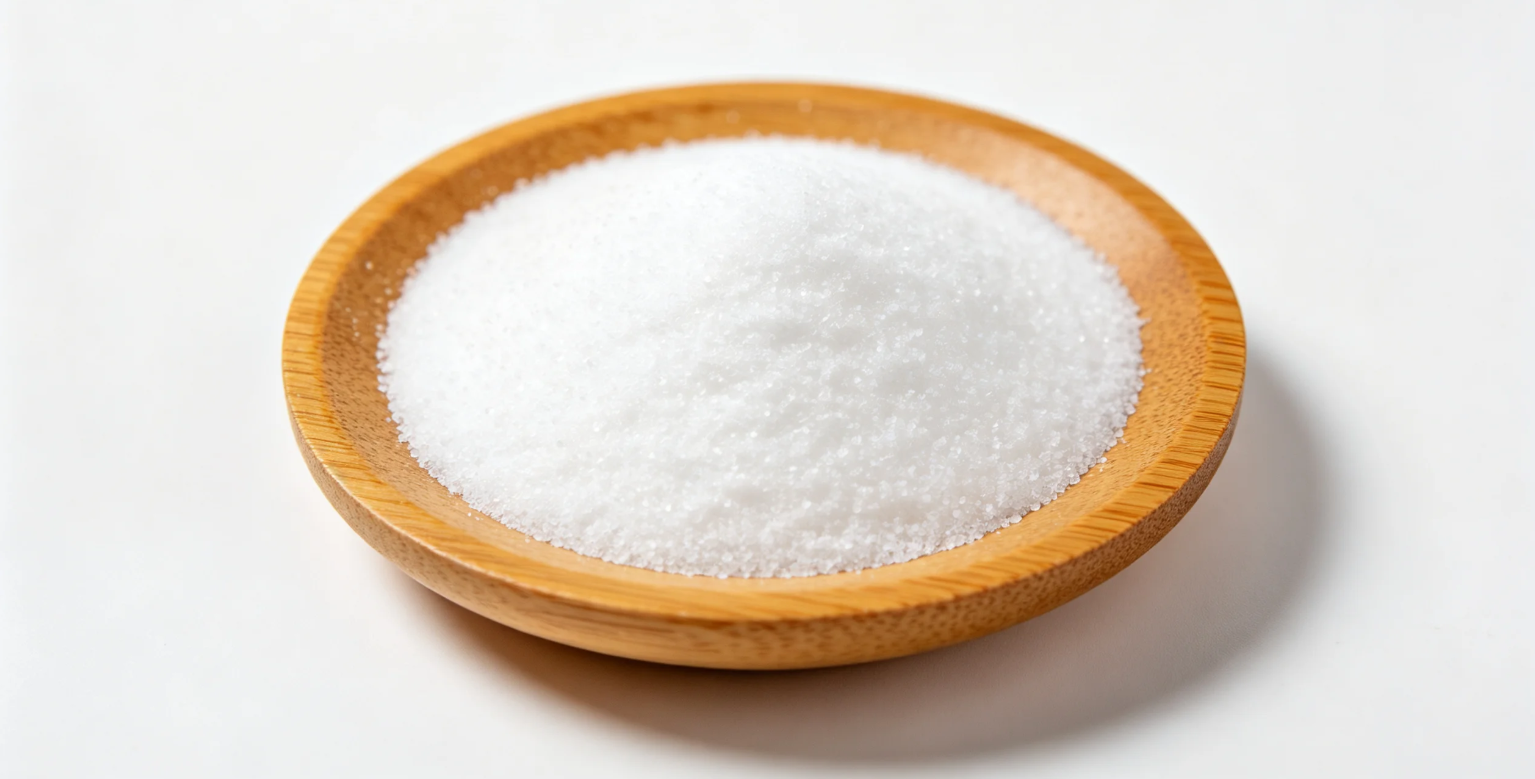
Organic Polydextrose Powder is the specification of choice for dry and solid-format applications. It is produced as a white free-flowing powder with >=90% dietary fiber content (AOAC 2011.25), >=98% solubility in both hot and cold water, and exceptional thermal stability up to 220 degrees C — the highest heat stability of any common soluble fiber. The pH of a 10% solution falls in the range of 5.0-6.5, indicating mild acidity. The particle size is 80-120 mesh as standard, with customization available to 200 mesh for applications requiring finer dispersion. The neutral-to-slightly sweet flavor profile does not interfere with base product flavors, making it suitable for clean-label formulations where ingredient taste is a concern. In baking applications, polydextrose powder can replace 30-50% of sucrose by volume while maintaining comparable texture and mouthfeel — a meaningful sugar and calorie reduction that does not require reformulation of the base recipe. The 1 kcal/g caloric value versus sucrose’s 4 kcal/g means that replacing 50% of sugar reduces total caloric contribution from the sweetener by approximately 87.5%.
Organic Polydextrose Syrup is the liquid-format counterpart, delivering >=75% polydextrose content with >=70% solids, slight natural sweetness, and a clear, colorless to light-yellow appearance. The lower polydextrose purity compared to the powder (>=75% vs >=90%) reflects the inherent constraints of the liquid format: the syrup also contains <=8% sorbitol, <=6% glucose and fructose combined, and <=4% maltose as by-products of the enzymatic polymerization process — all of which are disclosed on COA and product specifications. The DE (Dextrose Equivalent) of <=4 confirms that the syrup is predominantly composed of polymeric carbohydrates rather than simple sugars, distinguishing it from high-DE maltodextrin syrups that are rapidly digested and carry a much higher glycemic impact. The syrup’s pH of 2.5-4.0 reflects its acidic nature, which is inherent to the enzymatic process and does not require adjustment for most beverage and dairy applications. In liquid formulations — low-sugar yogurts, functional beverages, frozen desserts, and dairy alternatives — the syrup integrates without the dissolution step required for powder, simplifying production processes and enabling direct substitution for conventional syrup ingredients.
Both specifications share critical functional advantages that distinguish polydextrose from other soluble fibers. The heat stability of 220 degrees C is the highest of any common food fiber — polydextrose survives baking, extrusion, UHT processing, and retort sterilization without degradation, caramelization, or loss of fiber count, making it suitable for a wider range of manufacturing processes than heat-sensitive fibers like inulin. The pH stability from 2.5 to above neutral means polydextrose remains intact and functional across the full range of acidic beverage and fermented dairy applications where other fibers degrade. The prebiotic function — supporting Bifidobacterium and Lactobacillus populations — provides genuine gut health substantiation beyond generic fiber positioning, particularly valuable in an era where consumers and regulators increasingly require documented health claims.
Applications span five core categories:
(1) Bakery and confectionery — where powder replaces 30-50% of sugar in sugar-free cookies, cakes, and chocolate while maintaining texture and enabling “reduced calorie” and “high fiber” dual claims;
(2) Functional beverages and RTD — where syrup integrates into low-sugar formulations, functional drinks, and fermented dairy with minimal process adjustment;
(3) Nutrition bars and meal replacements — where powder’s bulking capacity and neutral flavor support high-fiber and sugar-reduction positioning without compromising texture;
(4) Pharmaceutical and supplement formats — where powder serves as an excipient in tablet binders and chewable supplement bases, and syrup as a liquid suspension medium;
(5) Dairy and plant-based alternatives — where syrup’s slight sweetness and acidic pH are compatible with yogurt, frozen desserts, and plant-based dairy formulations.
Certifications: USDA/NOP Organic · EU Organic (834/2007) · Non-GMO Project Verified · Vegan · Gluten-Free · FDA GRAS · EFSA Approved · FSSC 22000
Physical & Chemical Specifications
Product Specifications
| Parameter | Polydextrose Powder | Polydextrose Syrup |
|---|---|---|
| Source | 100% Organic Non-GMO Corn (glucose, sorbitol, citric acid) | 100% Organic Non-GMO Corn (enzymatic hydrolysis) |
| Processing | Enzymatic polymerization | Enzymatic polymerization |
| CAS Number | 68424-04-4 | — |
| Physical Form | White free-flowing powder | Clear, colorless to light yellow liquid |
| Polydextrose Content | >=90% dietary fiber (AOAC 2011.25) | >=75% polydextrose |
| Solids | N/A (powder) | >=70% |
| DE (Dextrose Equivalent) | N/A | <=4 (predominantly polymeric) |
| Sorbitol Content | Not separately stated | <=8% |
| Glucose + Fructose | Not separately stated | <=6% combined |
| Maltose | Not separately stated | <=4% |
| Ash | — | <=0.3% |
| Calories | 1 kcal/g | 1 kcal/g (approx.) |
| Glycemic Index | GI <=7 | GI <=7 |
| Solubility | >=98% in hot and cold water | Fully miscible in liquid systems |
| pH (10% solution) | 5.0-6.5 | 2.5-4.0 |
| Heat Stability | Stable to 220 degrees C | Stable to 220 degrees C |
| Moisture | <=3% | N/A (liquid) |
| Particle Size | 80-120 mesh (200 mesh available on request) | N/A |
| Shelf Life | 24 months | 24 months |
Fiber Comparison: Polydextrose vs. Common Soluble Fibers
| Parameter | Polydextrose Powder | Resistant Dextrin | Inulin | FOS | Psyllium |
|---|---|---|---|---|---|
| Fiber Purity | >=90% | 70-90% | 90-95% | 95-99% | 70-85% (husk) |
| Calories | 1 kcal/g | 1.5-2.0 kcal/g | 1.5 kcal/g | 2 kcal/g | 3-4 kcal/g |
| Glycemic Index | <=7 (very low) | Low | Low | Low | Low |
| Heat Stability | 220 degrees C (excellent) | 160 degrees C | Moderate | Moderate | Good |
| Acid Stability | Excellent (pH 2.5+) | Excellent (pH 2.5+) | Moderate | Moderate | Neutral |
| Solubility | >=98% (cold water) | Excellent | Good (hot water) | Excellent | Gel-forming |
| Prebiotic Effect | Strong (Bifidobacterium, Lactobacillus) | Strong | Strong | Moderate | Minimal |
| Sugar Replacement | 30-50% of sucrose volume | 1:1 syrup substitution | Limited | Limited | Not applicable |
| Texture (Baking) | Good bulking, simulates fat | Moderate | Can cause grittiness | Minimal | High viscosity |
| Viscosity | Low | None | Low | None | Very high |
| Digestive Tolerance | Moderate to high | High | Low | Low | Moderate |
| Kosher | Yes | Yes | Yes | Yes | Yes |
Dosage Reference
| Application | Suggested Usage Level |
|---|---|
| Bakery (Sugar Reduction — Powder) | Replace 30-50% of sucrose by volume |
| Confectionery (Sugar-Free — Powder) | 10-30% |
| Protein Bars / Meal Replacements | 5-15% |
| Functional Beverages / RTD — Syrup | 5-15% (liquid math) |
| Low-Sugar Yogurt / Dairy Alternatives — Syrup | 2-8% |
| Frozen Desserts — Syrup | 5-15% |
| Pharmaceutical Excipients (Powder) | Variable (tablet binder / bulking agent) |
| Prebiotic Supplement Capsules (Powder) | 20-50% |
Microbiological & Contaminant Standards
| Test Item | Specification |
|---|---|
| Total Plate Count (TPC) | <=1,000 cfu/g |
| Yeast & Mould | <=100 cfu/g |
| Coliforms | Negative |
| E. coli | Negative |
| Salmonella | Negative |
| Heavy Metals (Lead) | <=0.1 mg/kg (powder); <=0.5 mg/kg (syrup) |
| Heavy Metals (Arsenic) | <=0.05 mg/kg (powder); <=0.5 mg/kg (syrup) |
| Heavy Metals (Cadmium) | <=0.1 mg/kg |
| Heavy Metals (Mercury) | <=0.1 mg/kg |
| Pesticide Residues | Below EU/USDA organic limits |
| Polydextrose Identity | Confirmed (AOAC 2011.25 for powder) |
5. Certifications
| Certification | Status |
|---|---|
| USDA / NOP Organic | Available |
| EU Organic (834/2007) | Available |
| Non-GMO Project Verified | Available |
| Vegan | Available |
| Gluten-Free | Available |
| FDA GRAS | Recognized |
| EFSA Approved | Recognized |
| FSSC 22000 | Available |
| Kosher | Available on request |
| Halal | Available on request |
Applications & Formulation Guidelines
Application Matrix
| Category | Applications | Recommended Spec | Formulation Notes |
|---|---|---|---|
| Baking (Sugar Reduction) | Sugar-free cookies, cakes, breads | Powder | Replace 30-50% of sucrose by volume; maintains texture and mouthfeel; reduces calories proportionally |
| Confectionery | Sugar-free chocolate, hard candy | Powder | Bulking agent replaces sugar volume; 1 kcal/g vs 4 kcal/g = ~87.5% calorie reduction when replacing 50% sugar |
| Protein Bars / Meal Replacements | High-fiber, low-sugar nutrition bars | Powder | Neutral flavor; bulking supports bar structure; enables “high fiber” and “reduced net carb” dual claims |
| Functional Beverages / RTD | Low-sugar functional waters, prebiotic drinks | Syrup | Liquid format integrates directly; slight sweetness; acid-stable in beverages |
| Low-Sugar Yogurt / Dairy | Sugar-reduced fermented dairy, plant-based dairy | Syrup | Acid-stable (pH 2.5-4.0); slight sweetness; compatible with fermentation |
| Frozen Desserts | Low-sugar ice cream, frozen yogurt | Syrup | Freeze-thaw stable; slight sweetness enhances flavor perception |
| Pharmaceutical / Supplement Excipients | Tablet binders, chewable supplement bases | Powder | Free-flowing; non-hygroscopic; stable at compression pressures |
| Prebiotic Supplements | Gut health capsules, synbiotic blends | Powder | Prebiotic substantiation for Bifidobacterium and Lactobacillus |
| Pet Nutrition | Organic pet treats with digestive health claims | Powder | Prebiotic fiber support; neutral flavor; safe for companion animals |
Key Functional Benefits
| Benefit | Mechanism |
|---|---|
| Prebiotic Gut Health | Polydextrose is fermented by Bifidobacterium and Lactobacillus in the colon, promoting a favorable gut microbiome composition and producing short-chain fatty acids that support colon health and systemic inflammation reduction |
| Sugar and Fat Replacement | Polydextrose mimics the bulk, texture, and mouthfeel of sucrose and fat in baking and confectionery — replacing 30-50% of sugar by volume with minimal impact on texture, appearance, or consumer acceptance |
| 1 kcal/g Caloric Value | At 1 kcal/g versus sucrose’s 4 kcal/g, replacing 50% of sugar reduces sweetener calories by approximately 87.5% — a significant reduction achievable without consumer-detectable changes in most formulations |
| GI <=7 / Diabetic-Friendly | Negligible impact on blood glucose and insulin response; suitable for diabetic-friendly and low-GI product claims; fiber classification enables Net Carb deduction |
| Heat Stability (220 degrees C) | Highest heat stability of any common soluble fiber — survives baking, extrusion, UHT, and retort processing without degradation, caramelization, or fiber loss |
| Acid Stability (pH 2.5+) | Remains intact and functional in acidic environments — carbonated beverages, fruit juices, fermented dairy, and acidic functional drinks |
| Net Carb / Keto Positioning | Classified as dietary fiber; subtracted from total carbohydrates for Net Carb calculation; enables dual “added fiber” and “reduced net carbs” claims |
| Low-FODMAP Tolerance | Polydextrose is classified as low-FODMAP at doses starting from 10g/day — suitable for IBS-sensitive populations with gradual dose titration |
Synergy Tips
- With Probiotics (Bifidobacterium, Lactobacillus strains): Polydextrose functions as a true prebiotic — it selectively nourishes beneficial bacteria rather than fermenting indiscriminately. Combining with a probiotic blend creates a synbiotic formulation with documented gut health substantiation. Powder’s low hygroscopicity also protects probiotic viability during storage.
- With Resistant Dextrin: Both are prebiotic fibers with low glycemic impact; combining them diversifies the prebiotic effect (different fermentation profiles feed different bacterial populations) while maintaining a clean two-ingredient ingredient list.
- In Sugar Reduction Formulations (Powder): Replace 30-50% of sucrose by volume. The bulking capacity of polydextrose maintains recipe structure and mouthfeel; the 1 kcal/g caloric value versus sucrose’s 4 kcal/g means meaningful calorie reduction without consumer-detectable texture changes.
- With Inulin or FOS in Baking (Powder): Inulin at high usage in baked goods can cause grittiness; polydextrose’s neutral texture and bulking capacity can partially offset this, enabling blended fiber systems with both prebiotic breadth and acceptable texture.
- For IBS-Sensitive Consumer Products: Begin with <=10g/serving and titrate upward. Polydextrose’s low-FODMAP classification at moderate doses means it is typically better tolerated than inulin or FOS for IBS-sensitive consumers.
FAQ
Q: How is polydextrose different from inulin as a prebiotic fiber?
A: Both are prebiotic fibers — fermented by beneficial gut bacteria in the colon and supporting a favorable microbiome composition. However, the two differ significantly in functional behavior. Polydextrose has substantially higher heat stability (220 degrees C vs moderate for inulin), which widens the range of manufacturing processes it survives without degradation. Polydextrose also has superior solubility and a more neutral flavor profile, causing less interference with base product taste. In acidic conditions (pH below 4), inulin can gelatinize and lose solubility — polydextrose remains stable and functional. For IBS-sensitive consumers, polydextrose’s low-FODMAP classification at moderate doses (starting at <=10g/serving) means it is typically better tolerated than inulin, which can cause discomfort at doses as low as 5-10g per day.
Q: Can polydextrose replace maltodextrin in formulations?
A: Yes — and with meaningful functional improvements. Maltodextrin is a rapidly digestible polysaccharide with a high Glycemic Index (GI >100) and no prebiotic value; it functions purely as a bulking agent and carrier. Polydextrose provides equivalent bulk and carrier functionality while converting the ingredient from a digestible, high-GI carbohydrate into a prebiotic dietary fiber with 1 kcal/g caloric value and GI <=7. For manufacturers reformulating away from maltodextrin for cleaner, lower-GI, and prebiotic-positioned products, polydextrose is the most functionally equivalent replacement available.
Q: Is polydextrose safe for IBS and sensitive gut populations?
A: Polydextrose is classified as low-FODMAP, meaning it is generally well-tolerated by IBS-sensitive populations at moderate doses. The recommendation is to begin with a dose of 10g per day or less and titrate upward as tolerance develops. This is a significant practical advantage over inulin and FOS, which commonly cause flatulence and abdominal discomfort at doses of only 5-10g per day — limiting the effective fiber dose consumers can tolerate. Polydextrose enables higher daily fiber intake without the compliance challenges associated with less tolerable fibers.
Q: How does polydextrose perform in high-temperature baking processes?
A: Polydextrose is stable at temperatures up to 220 degrees C — the highest heat stability of any common soluble fiber. This means it survives baking, extrusion, and high-temperature processing without degradation into simple sugars, without caramelization, and without loss of the dietary fiber classification. The fiber count on the finished product label accurately reflects what the consumer receives. This stability also means polydextrose does not contribute to browning reactions in the same way that reducing sugars do — a consideration in formulations where caramelization is not desired.
Q: What is the difference between the powder and syrup specifications, and how do I choose?
A: The choice is driven by your existing production process and product format. Polydextrose Powder is the specification for dry-format applications — protein bars, meal replacements, tablets, capsules, dry bakery mixes, and powdered supplement blends. It dissolves at >=98% in both hot and cold water and provides the highest polydextrose purity (>=90%). Polydextrose Syrup is the specification for liquid-format applications — beverages, fermented dairy products, frozen desserts, and any formulation where a liquid ingredient is already the production matrix. The syrup’s >=70% solids and slight natural sweetness enable direct 1:1 substitution for conventional syrup ingredients without a dissolution step. The syrup’s polydextrose purity is >=75%, with the balance comprising sorbitol (<=8%), glucose and fructose combined (<=6%), and maltose (<=4%) — all disclosed on COA.
Q: How much sugar can polydextrose replace in baking applications?
A: Polydextrose powder can typically replace 30-50% of sucrose by volume while maintaining comparable texture, appearance, and consumer-acceptable taste in most baking applications. The bulking capacity — approximately equivalent to sucrose by volume — is the mechanism: polydextrose occupies the same space in the formula and contributes similar mouthfeel and structure without the same caloric contribution or glycemic impact. At 1 kcal/g versus sucrose’s 4 kcal/g, replacing 50% of sugar reduces the sweetener’s caloric contribution by approximately 87.5%. The remaining sucrose (50%) provides the sweetness perception that polydextrose alone cannot deliver.
Q: What does the DE (Dextrose Equivalent) of <=4 mean for the syrup?
A: DE is a measure of the degree of hydrolysis of a starch-based product — the percentage of reducing ends relative to total carbohydrates. A low DE (1-10) indicates a predominantly polymeric, slowly digested carbohydrate; a high DE (>20) indicates a rapidly digested, high-glycemic syrup. The syrup’s DE of <=4 confirms that it is composed primarily of polymeric polydextrose rather than simple sugars. The syrup does contain small amounts of sorbitol (<=8%), glucose and fructose combined (<=6%), and maltose (<=4%) — all disclosed — but the dominant fraction is the polymeric, slowly digested, low-GI polydextrose. This distinguishes it from high-DE maltodextrin syrups, which are rapidly digested and carry a much higher glycemic impact.
Q: What are the MOQ and shipping options?
A: Sample: 1 kg free of charge (FedEx / UPS / EMS). Standard batch: 25 kg per carton or drum. Lead time: 10-20 business days. Shipping from Qingdao or Tianjin ports, China. Payment terms: D/A, D/P, L/C, and T/T accepted. Custom options including instant-dissolve version and flavor-masked blends (neutral, vanilla, or chocolate) are available on request for the powder specification.
Packaging & Storage

Packaging Specifications
| Package Type | Net Weight | Material |
|---|---|---|
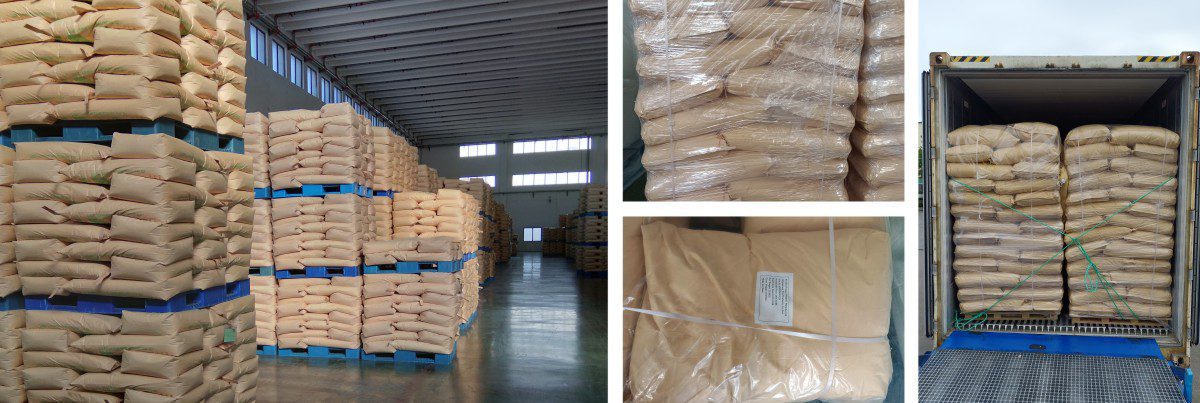
| Aluminum Foil Bag | 1 kg / 5 kg | Multi-layer aluminum foil with food-grade PE liner |
| Kraft Bag | 25 kg | Multi-layer kraft paper with food-grade PE liner |
| Food-Grade Drum (Syrup) | Available on request | HDPE or steel drum with sealed liner |
| Custom Packaging | Available on request | Private label and retail sizes |
Storage Conditions
| Parameter | Requirement |
|---|---|
| Temperature | Below 25 degrees C (cool, dry ambient) |
| Humidity | Below 60% relative humidity |
| Light | Standard packaging adequate |
| Powder Hygroscopicity | Low — store sealed; reseal after each use |
| Syrup Storage | Below 25 degrees C; avoid freezing; reseal tightly after use |
| Shelf Life — Powder | 24 months (from production date, sealed) |
| Shelf Life — Syrup | 24 months (from production date, sealed) |
Related Articles

What Is Organic Polydextrose Powder and Syrup and Why Are They Essential for Modern Food Formulation?
As the global demand for healthier, low-calorie, and high-fiber foods continues to…


Join ORGANICWAY at SupplySide Global 2025
Date: October 29–30, 2025Venue: Mandalay Bay Convention CenterAddress: 3950 Las Vegas Boulevard…

Join ORGANICWAY at Fine Food Australia 2025
Date: 8 – 11 September 2025Venue: ICC Sydney, Darling HarbourAddress: 14 Darling…

Meet ORGANICWAY at BIOFACH 2024 and Discover Our Wide Range of Organic Ingredients for Various Applications
Are you looking for high-quality organic ingredients for your food products? Do…