


Table of Contents
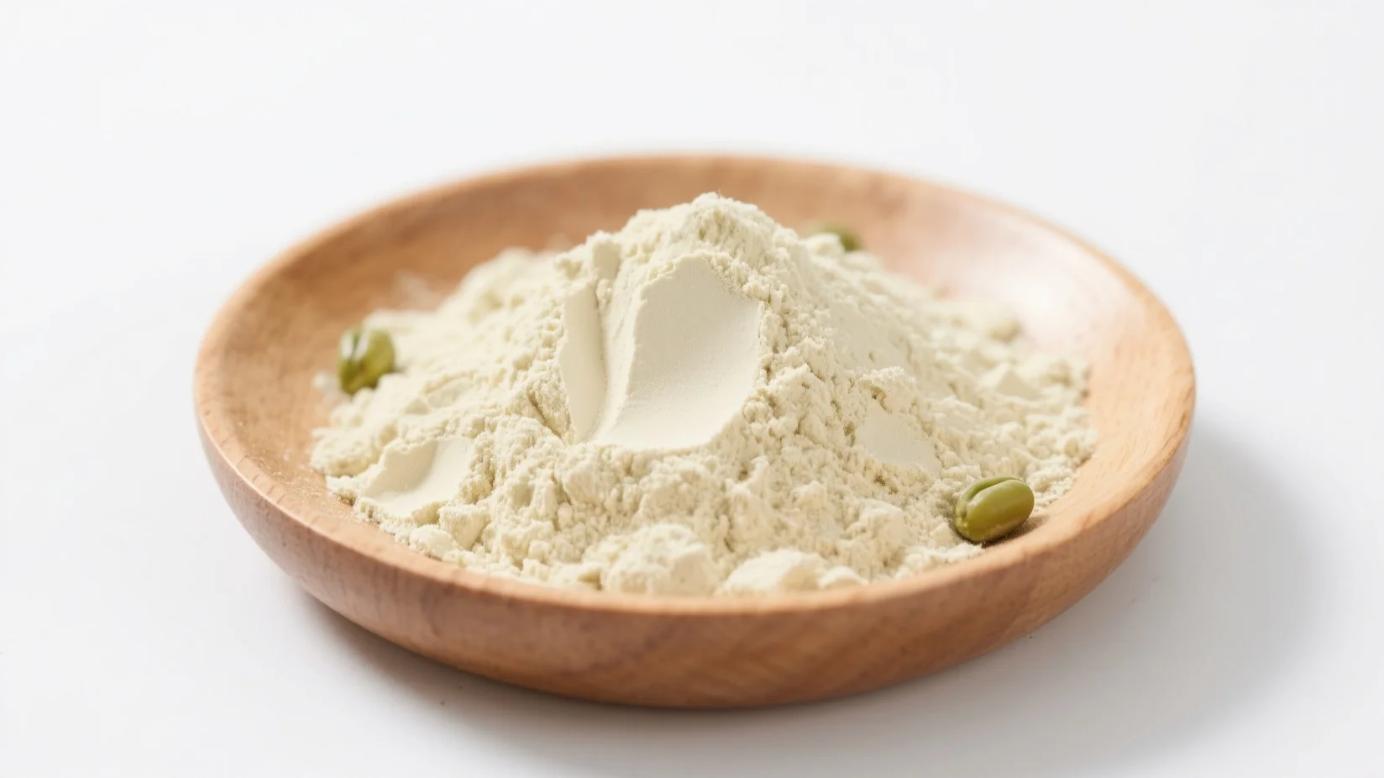
What is organic mung bean protein powder?
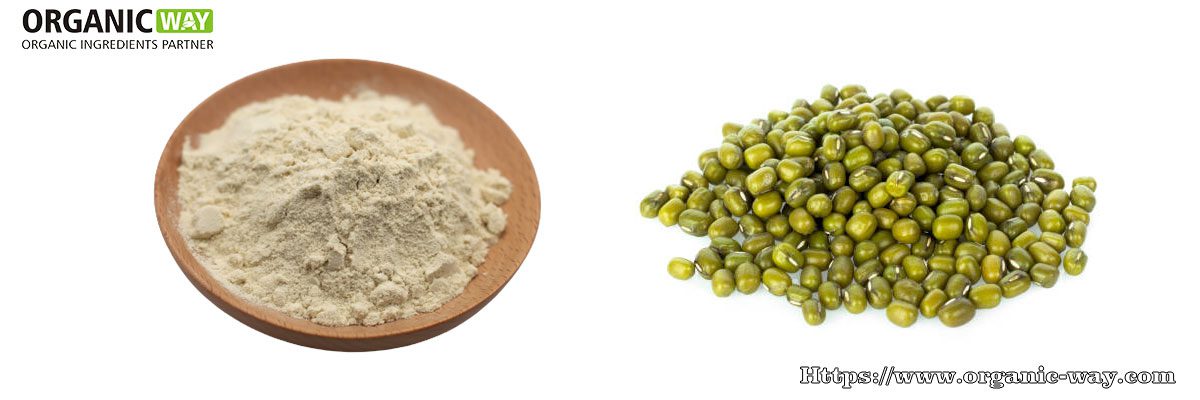
Organic mung bean protein is extracted from Vigna radiata (mung bean, also known as green gram) — one of the most digestible legumes, with a history of use in traditional Asian cuisine spanning thousands of years. Using aqueous extraction and membrane filtration, Organic Way produces a high-purity protein isolate (≥80% protein, dry basis) with two distinct functional properties that set it apart from competing plant proteins: exceptional gelation and superior emulsification.

Why Mung Bean Protein is the Preferred Functional Plant Protein
While most plant proteins are chosen for amino acid profile or flavor, mung bean protein is increasingly specified by formulators for its functional performance:
- Neutral flavor — the most organoleptically clean legume protein; below sensory threshold for beany, earthy, or grassy notes at standard inclusion levels, eliminating the need for flavor maskers
- Exceptional gelling properties — mung bean protein forms firm, elastic gels at protein concentrations as low as 8–10% (w/v), making it the most effective plant-based egg white replacer available; ideal for vegan meringues, marshmallows, and confectionery
- Superior emulsification — the 7S globulin fraction in mung beans has high surface hydrophobicity, producing stable oil-in-water emulsions with smaller droplet sizes than pea or soy protein; suitable for clean-label dressings and creamers
- Bioactive peptides — mung beans contain naturally occurring vitexin and isovitexin (flavonoid glycosides), which have demonstrated antioxidant and anti-inflammatory properties in peer-reviewed literature; a functional differentiation not found in pea, rice, or soy proteins
- High digestibility — PDCAAS of 0.74–0.78; while lower than pea (0.82), the bioactive peptides support overall nutritional value
- Big 9 Allergen-Free — inherently free from soy, dairy, gluten, and all major allergens; the preferred choice for allergen-sensitive formulations
Production & Quality Assurance
- Certified organic farm sourcing (USDA NOP / EU 834/2007)
- Incoming screening: pesticide residues, mycotoxins, heavy metals
- Aqueous extraction at controlled temperature (≤45°C) — no hexane
- Centrifugal separation and membrane filtration
- Spray-drying under controlled inlet temperature (≤180°C)
- Lot-specific COA with protein, moisture, fat, microbiology, and heavy metals
- Third-party verification (SGS / Eurofins) available on request
Technical Specifications
Grade Comparison
| Parameter | ≥65% Concentrate | ≥80% Isolate | Test Method |
|---|---|---|---|
| Protein (dry basis) | ≥ 65.0% | ≥ 80.0% | Kjeldahl / Dumas |
| Moisture | ≤ 8.0% | ≤ 7.0% | AOAC 930.15 |
| Fat | ≤ 10.0% | ≤ 8.0% | Soxhlet |
| Ash | ≤ 7.0% | ≤ 6.0% | AOAC 942.05 |
| Fiber | 8–13% | 4–7% | AOAC 985.29 |
| Carbohydrates | ≤ 15.0% | ≤ 5.0% | By difference |
| Sodium | ≤ 200mg/100g | ≤ 150mg/100g | ICP-MS |
| Vitexin | 0.5–1.2mg/g | 0.5–1.2mg/g | HPLC-UV |
| Isovitexin | 0.3–0.8mg/g | 0.3–0.8mg/g | HPLC-UV |
| Particle Size | 100–200 mesh | 100–200 mesh | Sieve analysis |
| Color | Light yellow | Light cream | Visual |
| Odor | Neutral | Neutral | Sensory |
| Solubility | ≥ 75% | ≥ 85% | NSI method |
| Gelling Capacity | Strong | Excellent | Method TBA |
Recommended grade selection:
- ≥80% Isolate: Egg white replacer, gelled desserts, plant-based confectionery, emulsified systems, sports nutrition
- ≥65% Concentrate: Bakery applications, fiber-enriched snacks, cost-sensitive applications
Microbiological Specifications
| Parameter | Specification | Test Method |
|---|---|---|
| Total Plate Count | ≤ 10,000 CFU/g | ISO 4833 |
| Yeast & Mold | ≤ 100 CFU/g | ISO 21527 |
| Coliform | ≤ 10 CFU/g | ISO 4832 |
| E. coli | Negative/25g | ISO 16654 |
| Salmonella | Negative/25g | ISO 6579 |
Heavy Metals & Contaminants
| Parameter | Specification | Standard |
|---|---|---|
| Lead (Pb) | ≤ 0.5 mg/kg | Prop 65 / EU 2021/1323 |
| Arsenic (As) | ≤ 0.3 mg/kg | Prop 65 |
| Cadmium (Cd) | ≤ 0.1 mg/kg | EU Regulation |
| Mercury (Hg) | ≤ 0.05 mg/kg | Prop 65 |
| Mycotoxins (Total AFB1) | ≤ 4 μg/kg | EU 2023/915 |
| Pesticide Residues | ND (per EC 396/2005) | GC-MS/MS |
Certifications
| Certification | Issuing Body | Scope |
|---|---|---|
| USDA Organic | USDA NOP (via accredited certifier) | Production + processing |
| EU Organic | EU Reg. (EC) No 834/2007 | Import + sale in EU |
| Non-GMO Project Verified | Non-GMO Project | Raw material + finished product |
| Kosher | KSA / OU (lot-specific) | Processing facility |
| Halal | IFANCA / MUI (lot-specific) | Processing facility |
| FSSC 22000 | Bureau Veritas | Manufacturing facility |
Applications & Formulation Guidance
Primary Application Areas
| Application | Why Mung Bean Works | Typical Addition |
|---|---|---|
| Plant-Based Egg White Replacer (meringue, marshmallow, mousse) | Forms firm elastic gel at 8–10% protein; best plant gelling performance of all legume proteins | 8–15% of formula |
| Plant-Based Confectionery (gummies, jelly) | Thermoreversible gelation, neutral flavor, clean label | 5–12% of formula |
| Plant-Based Meat Analogues | Gelling + emulsification dual function, neutral flavor | 8–15% of blend |
| Plant-Based Dairy (yogurt, cream cheese alternative) | Emulsification and texture building | 3–6% of formula |
| Sports Nutrition Shakes & Bars | High BCAA, neutral flavor, UHT-stable (80% grade) | 15–25g/serving |
| Plant-Based Dressings & Creamers | Superior emulsification vs. pea/soy | 1–3% of formula |
| Bakery (protein bread, crackers) | Mild flavor, light color, fiber co-benefit (65% grade) | 5–12% of flour |
| Noodle & Pasta Fortification | High protein enrichment, neutral flavor | 5–10% of flour |
Formulation Notes
- Egg white replacement: Mung bean protein isolate at 8–12% (w/v) in water, heated to 80–90°C for 20 min, produces a firm white gel with foam stability comparable to 10% egg white solutions. Adjust pH to 7.0–8.0 with food-grade NaOH or NaHCO3 for optimal gel elasticity.
- Emulsification advantage: Mung bean protein produces smaller emulsion droplet sizes (d₃₂ < 2μm) than pea or soy at equivalent protein concentrations — reduces need for synthetic emulsifiers
- Flavor pairing: Natural affinity with pandan, coconut, pandan-coconut, matcha; pairs exceptionally well with vanilla and caramel
- Bioactive claim opportunity: The vitexin/isovitexin content (0.5–1.2mg/g) supports antioxidant property claims in finished goods — applicable in EU and US supplement/food markets
FAQs
Q1: How does Organic Mung Bean Protein flavor compare to Pea Protein?
A: Mung bean protein is significantly more neutral than pea protein. In independent sensory evaluations, mung bean protein scores below the threshold for any legume-associated off-flavor (beany, earthy, grassy) at inclusion levels up to 25g per serving. Pea protein consistently registers mild beany notes at the same inclusion level. This neutrality allows clean-label formulations without flavor maskers or added ingredients — a meaningful cost and label advantage.
Q2: How does your extraction process ensure no hexane is used?
A: Our Organic Mung Bean Protein is produced exclusively through aqueous extraction — water, mechanical separation, and membrane filtration. No hexane, no alcohol, and no chemical solvents are used at any stage. This is not only an organic certification requirement (USDA NOP / EU 834/2007) but also produces a cleaner protein with a more neutral flavor profile compared to solvent-extracted alternatives. We can provide a solvent-free declaration with every lot COA upon request.
Q3: Can Mung Bean Protein truly replace egg whites in formulations?
A: Yes — for most applications. Mung bean protein isolate (≥80%) forms firm, elastic, thermoreversible gels when heated at 8–12% protein concentration, pH 7.0–8.0. It is the most effective plant-based egg white replacer available for: vegan meringues (holds foam under baking temperatures), marshmallows (stable gel matrix), protein mousses, and confectionery gummies. Note: it cannot replicate egg white aeration properties (foam volume) without mechanical whipping support. For egg white replacement in bakery (egg wash, leavening), partial replacement (30–50%) is recommended alongside another binder.
Q4: What are vitexin and isovitexin, and do they provide a functional claim opportunity?
A: Vitexin (apigenin-8-C-glucoside) and isovitexin (homovitexin) are naturally occurring flavonoid C-glycosides found in mung beans. Peer-reviewed research (Pharmaceutical Biology, 2020; Food Chemistry, 2019) has demonstrated their antioxidant, anti-inflammatory, and α-glucosidase inhibitory properties. Our ≥80% isolate retains 0.5–1.2mg/g of each compound. This natural bioactive content can be referenced in EU and US marketing materials as “contains vitexin and isovitexin” — a unique differentiation vs. pea, soy, rice, or hemp proteins which do not contain these compounds. Verify specific regulatory acceptability in your target market before making health claims.
Q5: Is Mung Bean Protein Prop 65 compliant for California market?
A: Yes. Our Organic Mung Bean Protein is third-party tested by SGS/Eurofins and meets Prop 65 thresholds for all four regulated heavy metals: Pb ≤0.5mg/kg, As ≤0.3mg/kg, Cd ≤0.1mg/kg, Hg ≤0.05mg/kg. Lot-specific Prop 65 certificates are available on request and provided as standard for California-destined shipments.
Q6: What is the minimum order quantity (MOQ) and lead time?
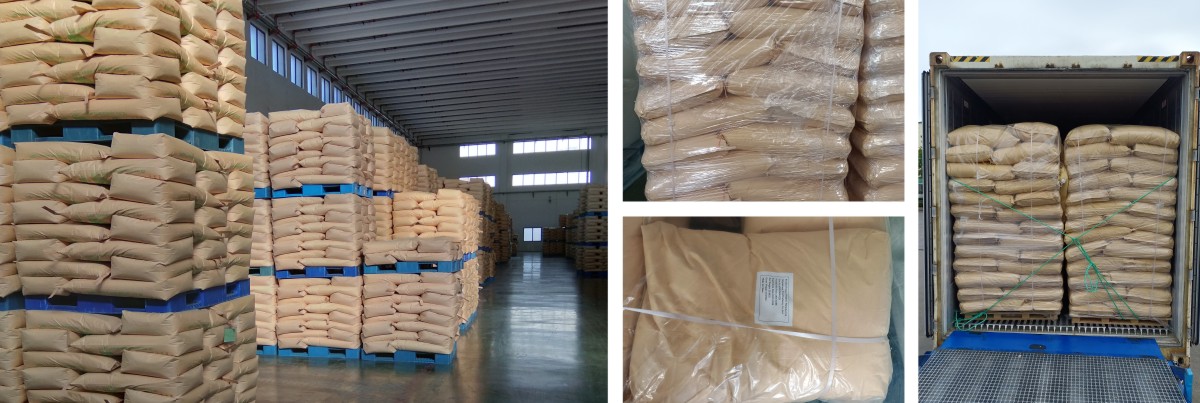
A: Standard MOQ is 500kg (20 × 25kg kraft bags per pallet). For custom specifications (specific vitexin content, specific mesh size, low-sodium variant), MOQ is 1,000kg. Standard production lead time is 10–14 business days from confirmed PO and sample approval. Samples (500g) available within 3–5 business days with courier tracking. Private-label packaging available from 2,000kg.
Packing & Storage

| Format | Net Weight | MOQ | Notes |
|---|---|---|---|
| Kraft paper bag (inner PE liner) | 25 kg | 500 kg | Standard B2B |
| White woven PP bag | 25 kg | 500 kg | Export |
| Fiber drum | 25 kg | 500 kg | Humid climates |
| Private-label retail | 500g / 1kg / 5kg | 2,000 kg | Amazon / retail |
Storage Conditions: ≤25°C, RH ≤60%, away from direct sunlight and strong odors. Shelf life: 24 months in original sealed packaging. After opening: reseal immediately; use within 3 months.
Related Articles

How Can Organic Mung Bean Protein Boost Your Plant-Based Diet?
For those embracing a plant-based lifestyle, ensuring adequate protein intake can sometimes be challenging. This is where organic…
Read More →
Which is Healthier: Mung Beans or Lentils? A Look at Organic Mung Bean Protein Powder
When it comes to plant-based nutrition, both mung beans and lentils are superstars in the legume family, celebrated…
Read More →
What Are the Benefits of Mung Beans? Organic Mung Bean Starch Powder’s Hidden Powers
Beyond salads and sprouts, organic mung beans harbor a stealth superpower: starch. Organic mung bean starch powder—crafted by…
Read More →