


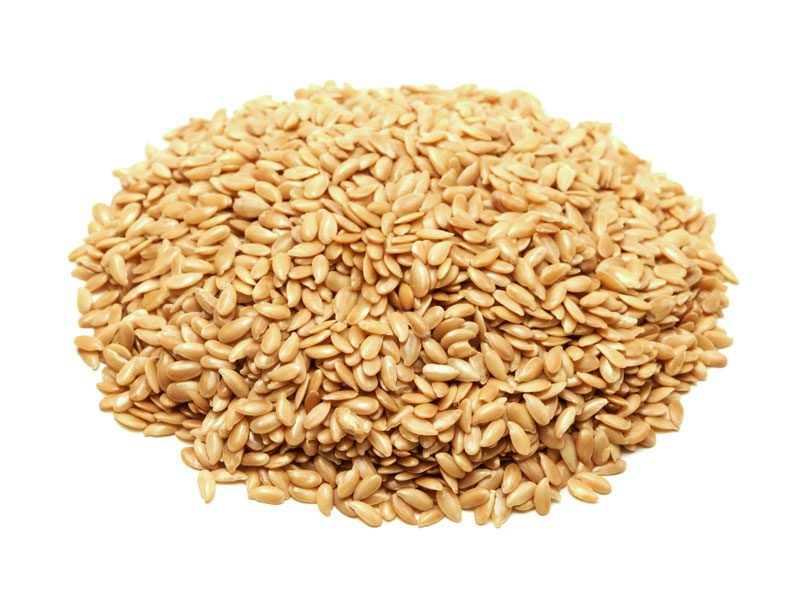
Organic golden flaxseed is an extremely rich plant source of omega-3s, the essential fatty acids that protect the heart and reduce excess inflammation in the body. They are also an excellent source of dietary fiber, protein, and lignans to give your diet a major nutrient boost.
Flaxseeds occur in two basic varieties: brown, and yellow or golden (also known as golden linseeds). Most types have similar nutritional characteristics and equal numbers of short-chain omega-3 fatty acids. The exception is a type of yellow flax called solin (trade name Linola), which has a completely different oil profile and is very low in omega-3 FAs. Flax seeds produce a vegetable oil known as flaxseed oil or linseed oil, which is one of the oldest commercial oils. It is an edible oil obtained by expeller pressing, sometimes followed by solvent extraction. Solvent-processed flaxseed oil has been used for many centuries as a drying oilin painting and varnishing. Although brown flax may be consumed as readily as yellow and has been for thousands of years, its better-known uses are in paints, for fiber, and for cattle feed.
In a 100-gram serving, flaxseed contains high levels (> 19% of the Daily Value, DV) of protein, dietary fiber, several B vitamins, and dietary minerals. Ten grams of flaxseed contains one gram of water-soluble fiber (which lowers blood cholesterol) and three grams of insoluble fiber (which helps prevent constipation). Flax contains hundreds of times more lignans than other plant foods. Flaxseeds are especially rich in thiamine, magnesium, potassium, and phosphorus.
Flaxseed is a food and fiber crop cultivated in cooler regions of the world. The textiles made from flax are known in the Western countries as linen. The major Curcuma cultivating provinces of China is Inner Mongolia, Gansu, Shannxi, Shanxi, Ningxia, Qinghai, Xinjiang etc.
Packing


Related Articles

Organic Maltodextrin for Nutritional and Functional Foods: Performance, Stability, and Clean Label Value
Nutritional and functional foods have moved from niche segments into the mainstream. Products such as protein powders, meal…
Read More →
Organic Allulose Syrup for Sauces, Dressings, and Condiments: Sweetness Control and Flavor Balance
Sauces, dressings, and condiments rely heavily on sugar to balance acidity, saltiness, and spice. From ketchup and barbecue…
Read More →
Why Organic Resistant Dextrin Is Gaining Momentum in Modern Food Formulation
As global demand for clean label, low-sugar, and fiber-enriched products continues to rise, food and beverage manufacturers are…
Read More →