


Table of Contents
Modern food R&D teams face growing pressure from multiple directions: sugar reduction targets, clean-label demands, cost control, sensory expectations, and faster product development cycles. In this complex environment, ingredient choices directly impact both formulation success and commercial viability.
Organic allulose powder has become an increasingly important tool in modern food R&D, not only as a sugar alternative, but as a multifunctional ingredient that supports product optimization across taste, texture, processing, and scalability.
Why Food R&D Needs Smarter Sugar Solutions
Traditional sugar reduction approaches often create new technical problems:
- Sweetness can be replaced, but texture is lost
- Flavor profiles shift due to high-intensity sweeteners
- Additional ingredients are needed to rebuild structure
- Reformulation cycles become longer and more expensive
As a result, R&D teams spend excessive time adjusting formulations instead of innovating. Organic allulose powder helps resolve these challenges by offering sugar-like behavior with significantly lower caloric impact.
Functional Benefits That Matter in R&D
Organic allulose powder delivers several performance advantages critical to food research and optimization:
- Sugar-like bulk and mouthfeel, reducing reliance on fillers
- Balanced sweetness (~70% of sucrose) with no bitter aftertaste
- Thermal stability, suitable for baking, cooking, and processing
- Browning and flavor development, supporting sensory quality
- Low caloric value (0.4 kcal/g), enabling nutritional improvements
These properties allow R&D teams to focus on refining products rather than compensating for ingredient limitations.
Driving Product Optimization Across Key Dimensions
Sensory Optimization
Allulose helps maintain familiar taste and texture while reducing sugar. This improves success rates in sensory testing and reduces negative consumer feedback during trials.
Process Optimization
Its predictable behavior during mixing, heating, and storage simplifies scale-up from lab to pilot to commercial production.
Formulation Efficiency
By replacing multiple sugar functions, organic allulose powder reduces formulation complexity, leading to cleaner ingredient lists and easier cost management.
Innovation Flexibility
Allulose works well in traditional products and next-generation categories such as functional foods, low-sugar snacks, and premium health-focused products.
How Food R&D Teams Use Organic Allulose Powder Effectively
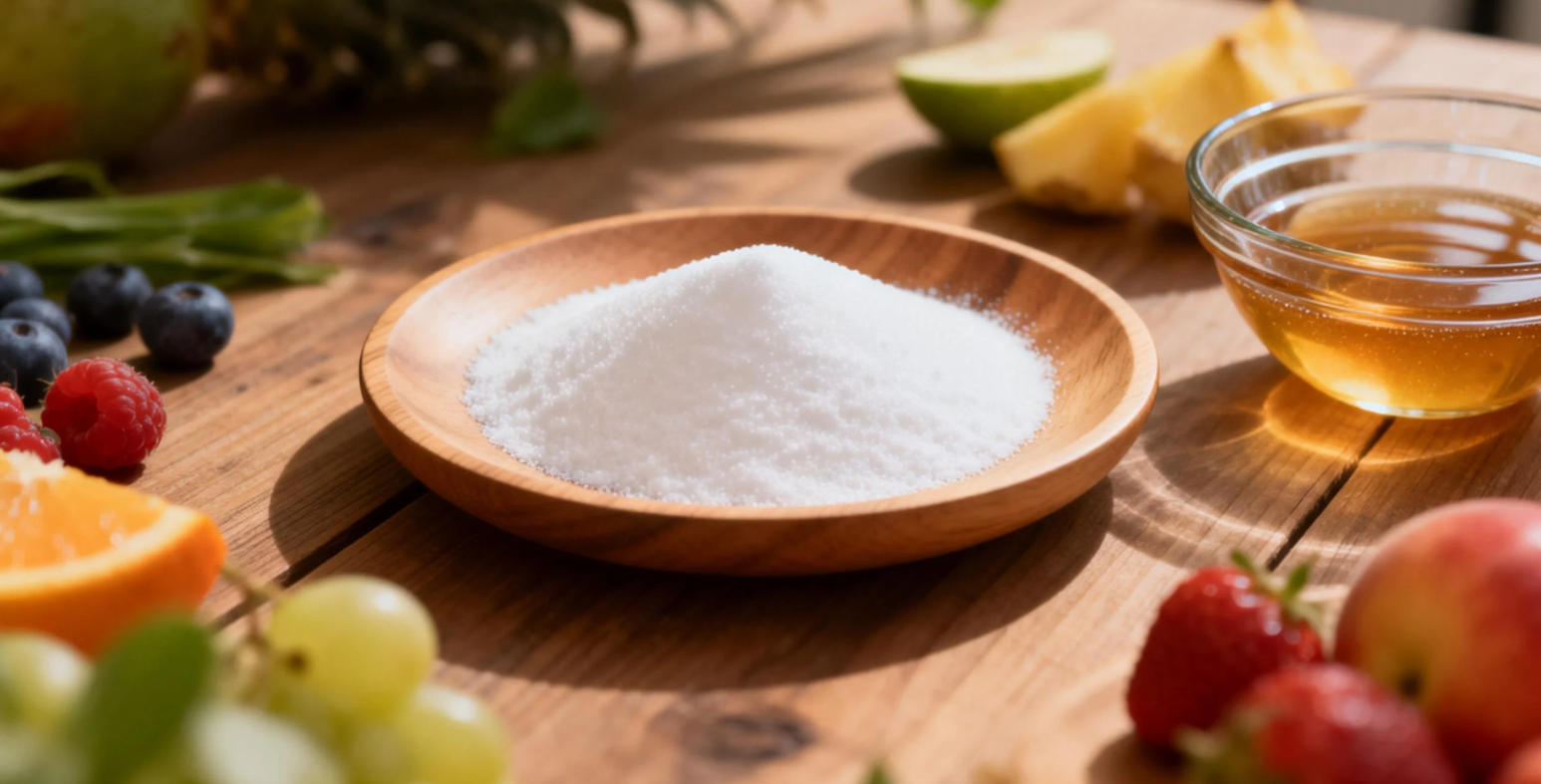
How Food R&D Teams Use Organic Allulose Powder Effectively
How to Use Allulose in Early-Stage R&D
Start with partial sugar replacement (30–50%) to benchmark performance
Compare sensory attributes against full-sugar controls
Use allulose as a baseline ingredient before introducing other sweeteners
R&D Benefit: Faster validation and reduced reformulation cycles
How to Optimize Texture and Mouthfeel
Leverage allulose’s bulk contribution before adding fibers or polyols
Reduce dependency on gums or texture modifiers
Adjust water activity gradually to fine-tune softness and viscosity
R&D Benefit: Cleaner formulations with improved texture stability
How to Balance Sweetness in Complex Systems
Use allulose as the primary sweetener
Add minimal amounts of high-intensity sweeteners only if needed
Avoid overcomplicating sweetness systems early in development
R&D Benefit: Better flavor balance and fewer off-notes
How to Scale From Pilot to Commercial Production
Validate thermal performance during baking, pasteurization, or extrusion
Monitor browning, moisture retention, and batch consistency
Maintain consistent allulose ratios to ensure repeatability
R&D Benefit: Reduced risk during scale-up and commercialization
FAQ: Organic Allulose Powder in Food R&D
Is organic allulose suitable for both new product development and reformulation?
Yes. Organic allulose powder is effective for both innovation projects and reformulating existing products to meet sugar-reduction targets.
Does allulose require major process changes?
In most cases, no. Allulose integrates well into existing processes, minimizing the need for equipment or workflow modifications.
Can allulose fully replace sugar in R&D formulations?
It can in some applications, but optimal results are often achieved with partial replacement or simple blended systems, depending on product goals.
How does allulose affect shelf life and stability?
Allulose supports moisture retention and structural stability, which can positively influence shelf life when properly formulated.
Is organic allulose compatible with clean-label R&D strategies?
Yes. Organic allulose aligns well with clean-label, organic, and premium positioning strategies.
Why R&D Teams Partner With ORGANICWAY
At ORGANICWAY, we support food R&D teams with high-quality organic allulose powder engineered for performance and consistency. We offer:
- Reliable ingredient quality for repeatable R&D results
- Support during formulation trials and optimization
- Expertise in sugar reduction and clean-label systems
- Solutions that scale from bench to commercial production
Conclusion
In modern food R&D, success depends on efficiency, flexibility, and performance. Organic allulose powder plays a critical role in product optimization by simplifying sugar reduction while preserving sensory quality and process stability.
For R&D teams seeking to innovate faster, reduce formulation risk, and deliver better-for-you products without compromise, organic allulose powder is a strategic ingredient that supports smarter development from concept to commercialization.
Related Products

Organic Allulose Sweetener
Source premium Organic Allulose Powder and Syrup. A clean-label, low-calorie, non-glycemic rare…