


Table of Contents
Organic hemp seed oil is gaining momentum in global food ingredient markets, driven by rising demand for clean-label, nutrient-dense oils. For B2B buyers sourcing for food manufacturing, cosmetics, or pharmaceutical applications, the choice between cold-pressed and refined hemp seed oil carries significant implications for product performance, shelf life, and regulatory compliance. This guide provides a comprehensive technical comparison to support informed sourcing decisions.
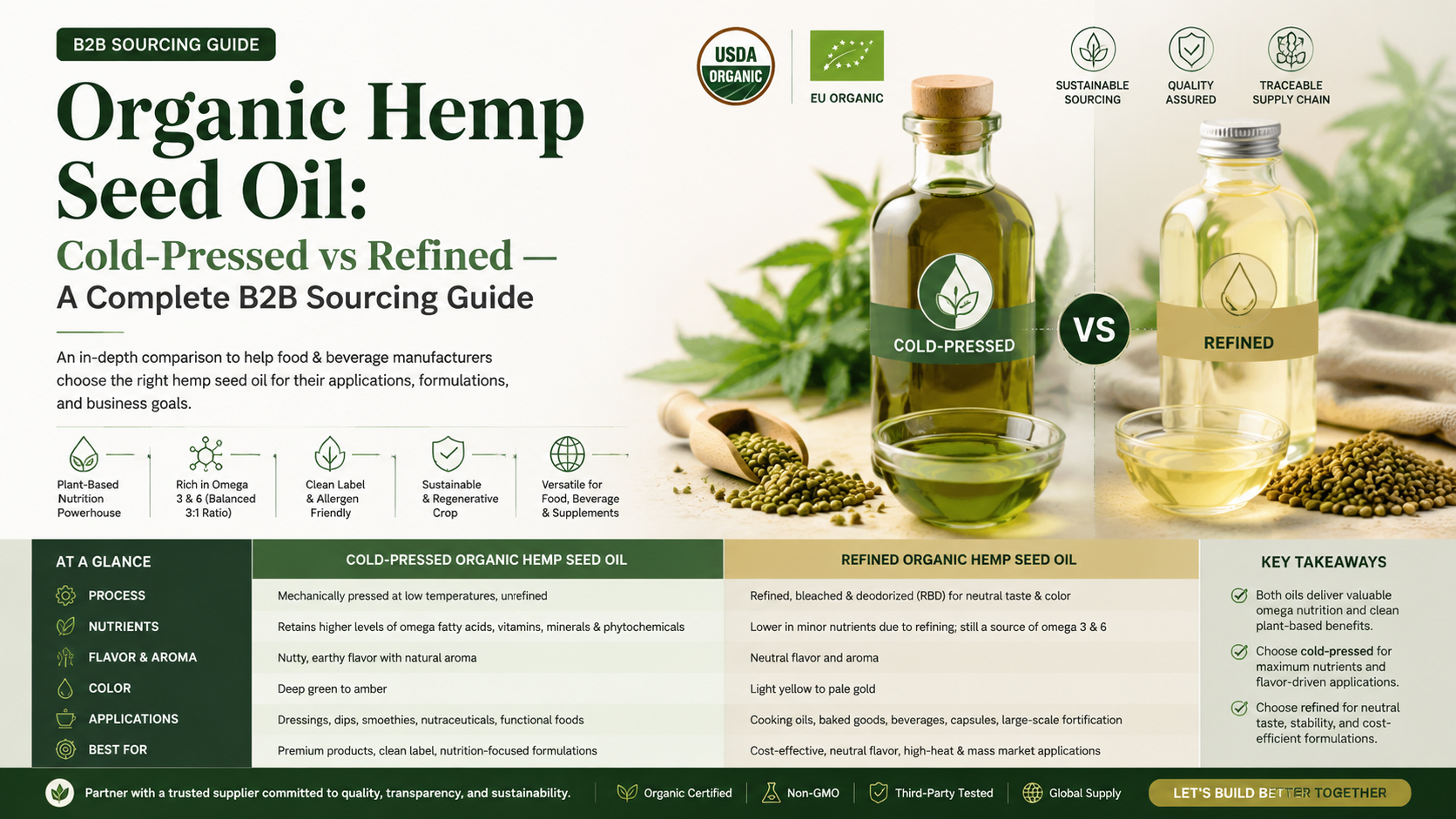
Understanding the Two Processing Methods
Cold-Pressed Extraction
Cold-pressed hemp seed oil is extracted through physical mechanical pressing at temperatures below 60 degrees Celsius. The process involves cleaning, dehulling, and pressing raw hemp seeds without heat or chemical intervention. Because no external heat is applied, the oil retains its natural biochemical profile. Research indicates that cold-pressing preserves approximately 98% of the oil’s nutritional integrity.
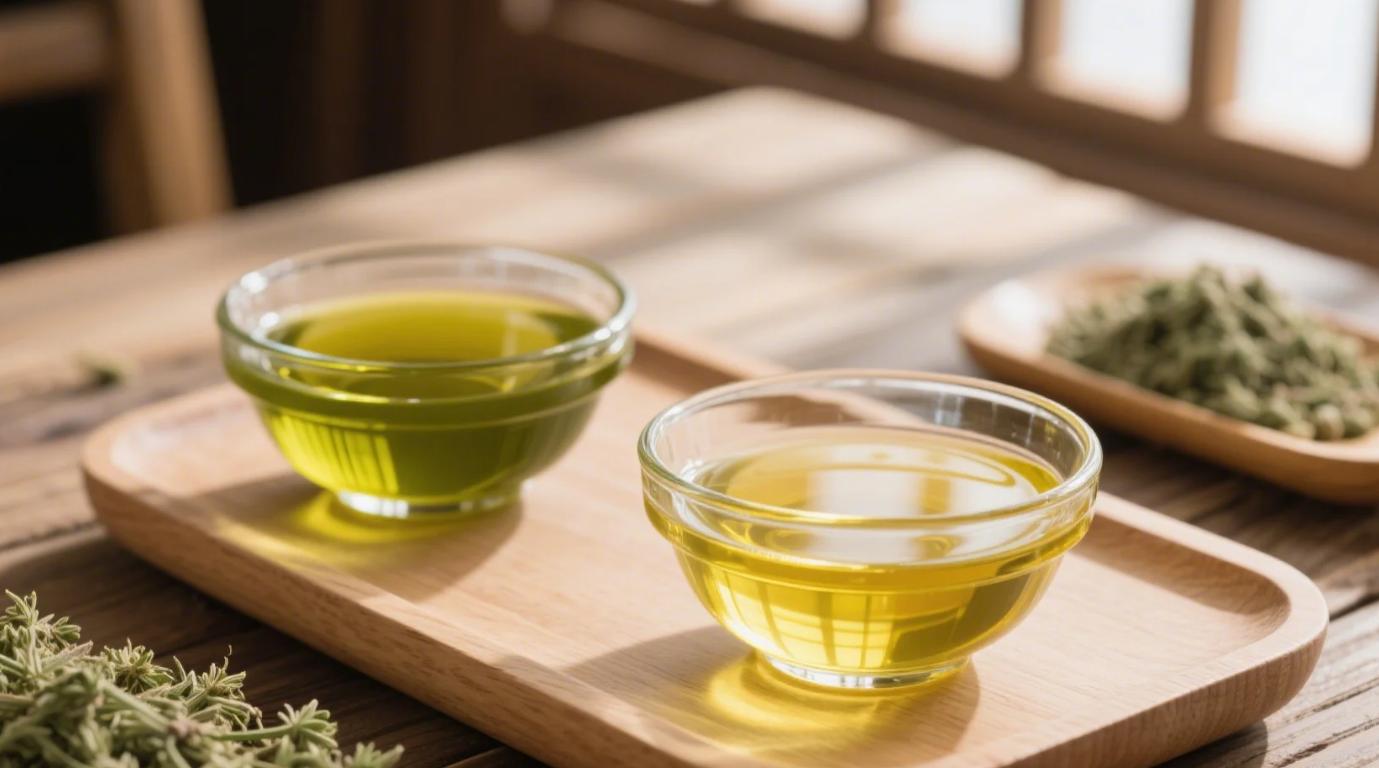
The resulting product is deep green in color with a distinct nutty aroma. It carries the full spectrum of naturally occurring compounds present in hemp seed, including chlorophyll, tocopherols, and carotenoids. However, because cold-pressed oil is produced from freshly harvested crops, quality can vary with harvest conditions and seed maturity. B2B buyers should verify that suppliers use newly harvested raw materials to ensure peak nutritional content.
Refined Extraction
Refined hemp seed oil undergoes a multi-stage post-extraction process designed to produce a neutral, heat-stable product. The refining sequence typically includes degumming (removing phospholipids), neutralization (reducing free fatty acids), bleaching (removing pigments), and deodorizing (eliminating odorous compounds through high-temperature steam treatment at approximately 232 degrees Celsius).
This chemical and thermal processing strips away chlorophyll, carotenoids, and most polar compounds, resulting in a light golden, nearly odorless oil. The trade-off is a significant reduction in naturally occurring antioxidants and bioactive compounds. Refined oil is primarily valued for its functional properties: high smoke point, extended shelf stability, and consistent performance in industrial applications.
Processing Method Comparison
| Attribute | Cold-Pressed | Refined |
|---|---|---|
| Max Temperature | <60 degrees Celsius | Up to 232 degrees Celsius |
| Primary Method | Mechanical pressing | Solvent extraction + refining |
| Chemical Treatment | None | Degumming, neutralizing, bleaching, deodorizing |
| Nutritional Retention | ~98% of original nutrients | Significantly reduced |
| Color | Deep green | Light gold |
| Flavor/Aroma | Nutty, distinctive | Neutral, odorless |
| Typical Applications | Functional foods, supplements | Cooking, cosmetics, pharmaceuticals |
Nutritional Comparison: Cold-Pressed vs Refined
Fatty Acid Profile
Both cold-pressed and refined hemp seed oil share a favorable fatty acid composition: an approximate 3:1 ratio of omega-6 (linoleic acid) to omega-3 (alpha-linolenic acid), which aligns closely with human dietary requirements. Hemp seed oil also contains gamma-linolenic acid (GLA), a relatively rare omega-6 fatty acid with documented anti-inflammatory properties.
The refining process does not fundamentally alter the fatty acid profile, as triglycerides are relatively heat-stable. However, the secondary compounds — those that differentiate the two products — are substantially affected by high-temperature refining.
Vitamin and Antioxidant Retention
The most significant nutritional divergence occurs in micronutrient content. Cold-pressed hemp seed oil retains natural tocopherols (vitamin E), carotenoids, and chlorophyll, all of which contribute antioxidant activity. Refined oil loses the majority of these compounds during deodorizing and bleaching.
- Vitamin E (tocopherols): Cold-pressed retains naturally occurring tocopherols; refined oil typically requires synthetic vitamin E supplementation.
- Chlorophyll: Present in cold-pressed oil (contributing to its green color); absent in refined oil.
- Carotenoids: Cold-pressed retains plant-derived carotenoids; refined oil appears pale yellow due to their removal.
Sensory Properties
| Attribute | Cold-Pressed | Refined |
|---|---|---|
| Color | Deep green | Light gold, clear |
| Flavor | Rich, nutty, hemp-forward | Neutral, no distinctive taste |
| Aroma | Characteristic nutty scent | Odorless |
| Mouthfeel | Full-bodied | Light, clean |
Application Match: Which Oil for Which Product
Cold-Pressed: Optimal Applications
- Salad Dressings and Vinaigrettes: The nutty flavor profile complements acidic bases, and the oil’s antioxidant content supports clean-label positioning.
- Smoothies and Functional Drinks: Cold-pressed hemp oil adds omega-3 and GLA to nutritional drink formulations. Studies indicate that GLA supplementation can improve cognitive markers by up to 22%.
- Topical Skincare and Clean Beauty: The clean beauty movement has driven adoption of cold-pressed hemp oil in skincare due to its retained tocopherol and fatty acid content.
- Raw Food Preparations: Drizzle applications, dips, and uncooked preparations preserve the oil’s full nutritional value.
Refined: Optimal Applications
- Baking and Confectionery: The neutral taste ensures no interference with sweet or savory flavor profiles. The smoke point of refined hemp oil (approximately 165 degrees Celsius) accommodates standard baking temperatures.
- High-Temperature Cooking: Refined oil’s thermal stability makes it suitable for sauteing and light frying where a neutral oil is preferred.
- Cosmetics and Pharmaceutical Formulations: Refined oil serves as a stable carrier oil in topical formulations where color and odor neutrality are required.
- Food Service and Industrial Food Processing: Large-scale food manufacturers favor refined oil for its batch-to-batch consistency and extended shelf stability.
Application Selection Guide
| Application Type | Recommended Oil | Rationale |
|---|---|---|
| Salad dressings, dips, drizzling | Cold-pressed | Flavor and clean-label appeal |
| Smoothies, functional beverages | Cold-pressed | Nutritional density |
| Skincare and clean beauty | Cold-pressed | Antioxidant retention |
| Baking, confectionery | Refined | Neutral flavor, thermal stability |
| High-heat cooking, frying | Refined | Smoke point and stability |
| Pharmaceutical excipient | Refined | Consistency, neutral profile |
| Large-scale food manufacturing | Refined | Shelf stability, batch uniformity |
Shelf Life and Storage Requirements
Cold-Pressed Oil
Cold-pressed hemp seed oil has a shelf life of approximately 18 months under optimal conditions.
- Temperature: Refrigeration recommended; storage below 10 degrees Celsius significantly slows oxidation
- Container: Dark glass bottles or opaque containers to shield against UV degradation
- Headspace: Minimal headspace reduces oxidation surface area; nitrogen flushing is common in premium B2B formulations
- Freshness indicator: The rich green color and nutty aroma are reliable quality markers
Refined Oil
- Shelf Life: Typically 24 months or longer at room temperature
- Storage: Ambient storage is acceptable; refrigeration is optional
- Key Quality Metrics: Acid value below 0.6 mg KOH/g and peroxide value below 10 mEq/kg at time of delivery
| Parameter | Cold-Pressed | Refined |
|---|---|---|
| Typical Shelf Life | 18 months | 24+ months |
| Recommended Storage | Refrigerated, <10 degrees Celsius | Room temperature acceptable |
| Container | Dark glass, opaque | Steel or HDPE containers |
| Critical Metrics | Color, aroma, peroxide value | Acid value, peroxide value |
| Nitrogen Flushing | Recommended | Optional |
Market Overview and Growth Drivers
Market Size and Segmentation
The global hemp seed oil market is projected to reach $9.8 billion by 2025, growing at a compound annual growth rate (CAGR) of 7.1%. Cold-pressed hemp seed oil accounts for approximately 65% of sales, driven by its premium positioning in health food and clean beauty markets. Refined oil holds 35% of the market, favored in industrial food processing and cosmetics manufacturing.
Regional Trends
North America: The FDA granted hemp-derived products Generally Recognized As Safe (GRAS) status, removing a key regulatory barrier. Demand is concentrated in premium food service and functional beverage segments.
Europe: Strong alignment with clean-label trends and the EU Organic certification framework. Sugar tax policies have encouraged food manufacturers to reformulate with healthier fat sources.
Asia-Pacific: China currently accounts for approximately 30% of global hemp seed oil production. Growing middle-class demand for premium health food ingredients drives regional growth.
Growth Drivers
- Plant-based diet adoption: Consumer preference for plant-derived omega fatty acids accelerates demand across all processed food categories.
- Clean beauty revolution: The shift away from synthetic cosmetic ingredients drives adoption of cold-pressed hemp oil in skincare and personal care.
- Sustainable sourcing pressure: B2B buyers increasingly prioritize suppliers demonstrating sustainable production practices.
- Scientific validation: Clinical data supporting hemp seed oil’s cardiovascular benefits (omega 3:1 ratio reduces LDL cholesterol by up to 18%) and skin health properties (collagen increase of up to 41%) strengthens marketing claims.
Sourcing Checklist for B2B Buyers
Organic Certification: Confirm USDA Organic certification, EU Organic NOP certification, or both. Dual certification is preferred for buyers supplying across North American and European markets simultaneously.
Food Safety Management Certification: Verify BRC certification or equivalent FSSC 22000 / SQF certification.
Third-Party Laboratory Testing: Request current Certificates of Analysis (CoA) confirming:
- Heavy metal testing (lead, cadmium, arsenic, mercury below regulatory thresholds)
- Pesticide residue screening (compliant with EU MRL or USDA NOP standards)
- THC content verification (delta-9-THC below 0.3%)
- Microbiological testing (total plate count, yeast, mold, E. coli)
Geographic Origin and Supply Chain Transparency: China represents approximately 30% of global production, with major processing hubs in Yunnan and Heilongjiang provinces. Request supplier audits or virtual facility tours.
Freshness and Harvest Year Verification: For cold-pressed oil, confirm the harvest year. Request a minimum of 75% of shelf life remaining at time of delivery.
Sustainability and Ethics Documentation: Obtain supplier statements regarding sustainable seed sourcing, water usage, and fair labor practices.

Conclusion
The choice between cold-pressed and refined organic hemp seed oil is fundamentally a trade-off between nutritional density and functional versatility. Cold-pressed oil serves brands built on clean-label positioning and functional nutrition, while refined oil meets the operational demands of large-scale food manufacturing and cosmetics production. B2B buyers who align their oil selection with specific application requirements, storage capabilities, and target market regulations will achieve the best outcomes. ORGANICWAY supplies both certified organic varieties with full traceability and third-party testing documentation to support international B2B procurement standards.