


Table of Contents
The global organic hemp protein market is on a strong upward trajectory, with projections indicating it will reach approximately $7.08 billion by 2027, growing at a compound annual growth rate (CAGR) of 15.2% during the 2019–2027 forecast period. Driven by surging consumer demand for plant-based nutrition, rising awareness of hemp’s superior amino acid profile, and increasingly supportive regulatory frameworks, organic hemp protein has emerged as one of the most compelling segments within the broader plant-based protein industry — which itself is expected to surpass $16.3 billion by 2025. For brands and investors seeking to capitalize on this momentum, the current market environment presents distinct regional opportunities, expanding application frontiers, and actionable entry strategies worth pursuing now.
Market Size and Forecast
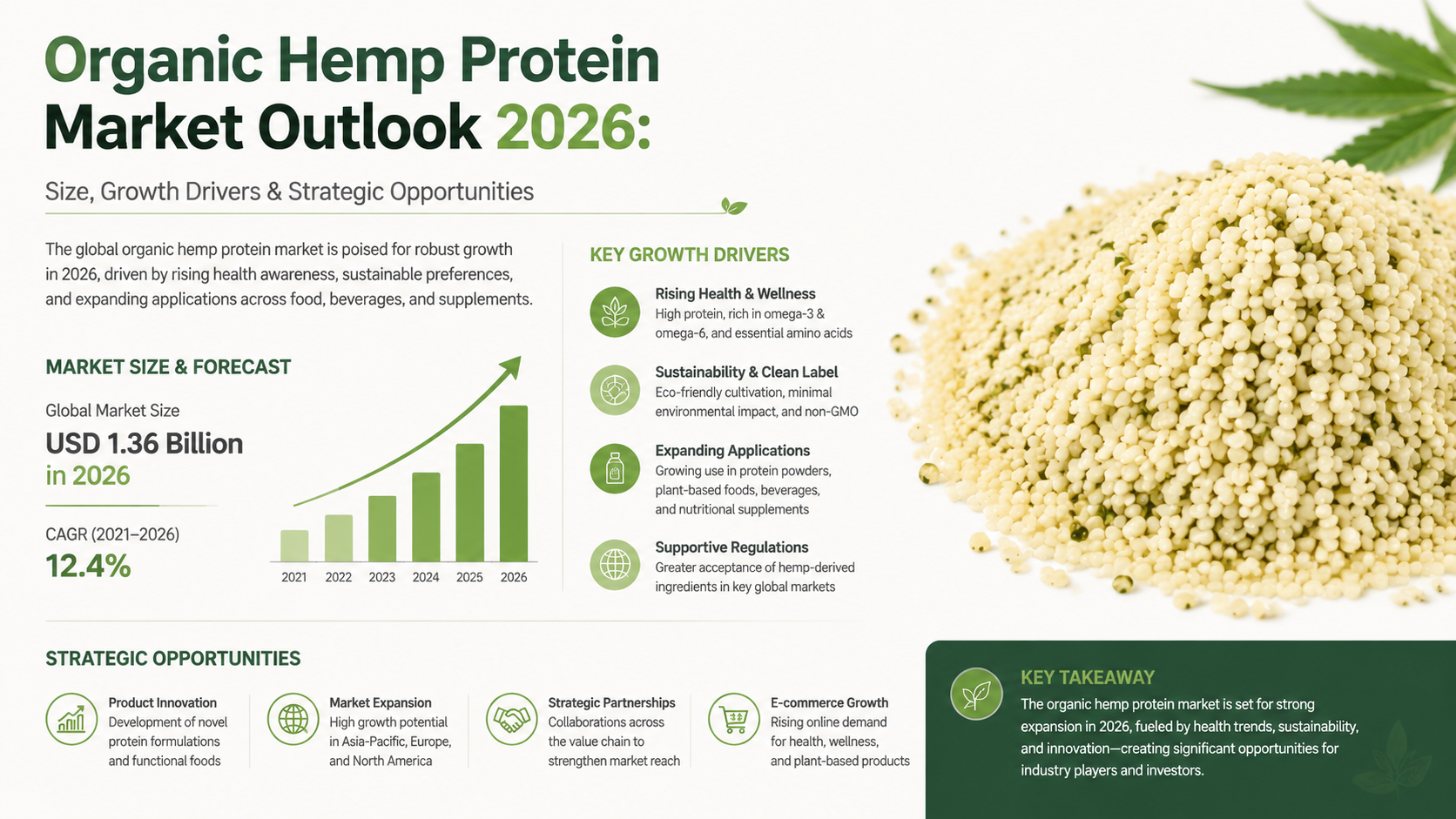
The organic hemp protein market has experienced consistent double-digit growth over the past several years, reflecting a fundamental shift in consumer dietary preferences and ingredient sourcing strategies across the food, beverage, nutraceutical, and personal care sectors. Building on the established 15.2% CAGR recorded between 2019 and 2024, market observers anticipate continued expansion through 2026 and beyond.
By extrapolating from verified growth trajectories and considering near-term macroeconomic tailwinds — including sustained demand for clean-label products and accelerated investment in plant-based supply chains — industry analysts estimate the global organic hemp protein market will approach $4.2–4.5 billion by the end of 2026. This positions the segment as a high-growth vertical within the larger plant-based protein ecosystem, which is itself on course to exceed $16.3 billion globally by 2025.
Several structural factors underpin this growth outlook. First, hemp protein differentiates itself through a complete amino acid profile, high fiber content, and excellent digestibility — attributes that command a premium position relative to competing plant proteins such as soy or pea isolate. Second, organic certification adds a layer of price premium and consumer trust that reinforces margin strength for upstream producers and downstream brands alike. Third, the versatility of hemp protein formats — ranging from raw powder and concentrates to textured isolates and ready-to-drink formulations — enables broad applicability across multiple product categories.
Key Growth Drivers
1. Escalating Consumer Demand for Plant-Based Nutrition
The shift toward plant-based diets is no longer a niche phenomenon. A growing body of research linking plant-forward eating patterns to improved health outcomes, combined with heightened concern over the environmental footprint of animal agriculture, has accelerated mainstream adoption. Hemp protein sits at the intersection of this consumer movement, offering a non-animal, non-soy, and non-GMO protein source that aligns with the clean-label expectations of contemporary shoppers. Retail data across North America and Europe confirms that shelf space allocated to organic plant protein products has expanded by over 30% year-over-year since 2020, with hemp-based SKUs capturing an increasing share of this allocation.
2. The Global Expansion of Vegan and Flexitarian Lifestyles
Veganism and flexitarian eating have transitioned from lifestyle movements to durable dietary patterns. Market intelligence firm GFI Europe reports that the number of Europeans identifying as vegan has tripled since 2018, while flexitarian households in the United States now represent an estimated 40% of the total grocery buyer base. Hemp protein’s neutral flavor profile, superior emulsification properties, and compatibility with both sweet and savory applications make it an ideal functional ingredient for manufacturers developing products that appeal to this broad demographic.
3. Heightened Nutritional Awareness and Functional Food Trends
Modern consumers are increasingly ingredient-literate. They scrutinize nutritional labels, seek out complete protein sources, and prioritize products that deliver functional benefits beyond basic nutrition. Hemp protein contains all nine essential amino acids, is rich in omega-3 and omega-6 fatty acids in an optimal ratio, and provides a natural source of iron, magnesium, and zinc. As the functional food and personalized nutrition markets expand, hemp protein’s nutritional density positions it favorably against less nutritionally complete plant protein alternatives.
4. Supportive Regulatory and Agricultural Policy Frameworks
Governments in several key markets have moved to clarify and liberalize the regulatory status of industrial hemp, removing historical barriers to cultivation and commercialization. In the United States, the 2018 Farm Bill’s removal of hemp from the Schedule I controlled substances list paved the way for a domestic hemp industry that has since grown to support thousands of farming operations. Similarly, the European Union’s revised Novel Food Catalogue and Canada’s progressive hemp cultivation framework have created more predictable operating environments for producers and ingredient suppliers. These policy shifts reduce market-entry risk and encourage investment in processing infrastructure.
5. Clean-Label and Non-GMO Product Positioning
The clean-label movement — characterized by consumer demand for minimal, recognizable, and responsibly sourced ingredients — plays directly to hemp protein’s strengths. Hemp is naturally non-GMO, requires no synthetic pesticides when grown under organic protocols, and undergoes minimal processing compared to isolated protein concentrates. As clean-label mandates influence retailer procurement decisions and private-label development strategies, organic hemp protein stands to benefit from preferential shelf placement and expanded distribution.
Regional Market Analysis
| Region | 2026 Est. Value | Growth Profile | Key Markets |
|---|---|---|---|
| North America | $1.6–1.8 billion | Mature, stable (15%+ CAGR) | United States, Canada |
| Europe | $1.2–1.4 billion | Fastest-growing (17%+ CAGR) | Germany, France, Netherlands, UK |
| Asia-Pacific | $600–800 million | Highest % growth; emerging | China, Japan, South Korea, Australia |
| Rest of World | $200–400 million | Early-stage | Brazil, South Africa |
North America: The Largest Market by Value
North America remains the largest regional market for organic hemp protein, driven by high consumer awareness of plant-based nutrition, a well-established retail infrastructure for natural and organic products, and a robust domestic supply chain anchored by producers in Canada and the United States. By 2026, North America’s organic hemp protein market is projected to represent approximately 38–40% of global market value, with the United States alone accounting for an estimated $1.6–1.8 billion.
Europe: The Fastest-Growing Market
Europe is widely regarded as the fastest-growing regional market for organic hemp protein. The convergence of a strong vegan consumer base, stringent clean-label standards, and progressive regulatory frameworks for hemp cultivation has created a favorable environment for market expansion. Germany, France, the Netherlands, and the United Kingdom lead in terms of consumption volume, while emerging markets in Eastern Europe are recording the highest percentage growth rates. By 2026, the European market is expected to grow at a CAGR exceeding 17%, potentially reaching $1.2–1.4 billion in value.
Asia-Pacific: Significant Growth with Untapped Potential
The Asia-Pacific region represents the most dynamic growth frontier for organic hemp protein. Rising disposable incomes, rapid urbanization, and a growing middle-class population with increasing access to international health and wellness trends are driving demand for premium plant-based protein products. China, Japan, South Korea, and Australia are the primary markets of interest, with China also emerging as a significant cultivator and processor of organic hemp. Industry estimates suggest the Asia-Pacific organic hemp protein market could reach $600–800 million by 2026.
Application Areas and Market Opportunities
Food and Beverage
The food and beverage sector is the largest end-use category for organic hemp protein. Product innovation in this space spans protein bars, RTD protein beverages, baked goods, plant-based meat alternatives, and snack formulations. Hemp protein’s emulsification and water-binding properties make it a functional asset in product development beyond its nutritional contribution.
Nutraceuticals and Dietary Supplements
The nutraceuticals segment represents the second-largest and fastest-growing application category by value. Hemp protein powders, capsules, and functional blends targeting fitness consumers, aging populations, and individuals with specific dietary requirements constitute the core of this category.
Personal Care and Cosmetics
An emerging application frontier for hemp protein lies in the personal care and cosmetics sector. Haircare, skincare, and anti-aging formulations increasingly incorporate hemp-derived proteins for their moisturizing, strengthening, and film-forming properties.
Strategic Recommendations for Brands
1. Secure Long-Term Organic Supply Agreements
Given the projected acceleration in demand through 2026 and beyond, brands should prioritize securing multi-year supply agreements with certified organic hemp protein producers. Early supply chain positioning is particularly critical for European brands seeking to comply with mandatory organic traceability requirements under EU regulation.
2. Invest in Clinical Validation and Brand Storytelling
Brands that differentiate through third-party clinical validation, transparent sourcing narratives, and verified sustainability metrics will capture disproportionate market share. Authentic storytelling around organic farming practices, community partnerships, and environmental impact strengthens brand equity in an increasingly values-driven market.
3. Expand into High-Growth Adjacent Categories
Brands currently focused solely on protein powders should evaluate adjacent product categories where hemp protein’s functional properties create a competitive edge — including textured hemp protein for the plant-based meat market and hemp protein-enriched beverages for the active nutrition segment.
4. Prioritize European and Asia-Pacific Market Entry
With North America approaching market maturity, the highest marginal growth will be found in Europe and Asia-Pacific. European brands should leverage the region’s regulatory alignment and consumer preference for organic certification to build premium positioning domestically before expanding eastward.
Conclusion
The organic hemp protein market presents a compelling strategic opportunity for brands, investors, and supply chain participants operating at the intersection of health, nutrition, and sustainability. With robust CAGR expansion, supportive regulatory developments, and a diversifying application landscape, the segment is well-positioned for sustained growth through 2026 and beyond.
Ready to explore partnership opportunities in the organic hemp protein supply chain? Contact OrganicWAY’s B2B ingredient team to discuss sourcing, custom specifications, and strategic partnership opportunities.